Hearing Wrap Up: Making Housing More Affordable Makes the American Dream More Attainable
WASHINGTON—Yesterday, the Subcommittee on Economic Growth, Energy Policy, and Regulatory Affairs held a hearing titled “Housing Affordability: Saving the American Dream.” During the hearing, members analyzed the factors, including overbearing federal and state regulations, that have made housing unaffordable for both younger and older Americans, leading to delays in major life milestones. Members also spotlighted ways in which Republicans all over the country are addressing this issue and working to lower housing costs, and compared innovative, market-based reforms to increase the housing supply.
Key Takeaways:
Housing regulations implemented by the Biden Administration have made home buying more difficult and costly, creating negative downstream effects across the economy.
- Edward J. Pinto, Senior Fellow and Codirector at the American Enterprise Institute Housing Center, testified that “The current state of the housing supply is best described as an irresistible force meeting an immovable object. The immovable object consists of overly restrictive land use regulations promulgated by most of the 33,000 plus state and local jurisdictions. That’s how many have zoning and land use power. This leads to unaffordability and a dearth of starter homes on smaller lots. The irresistible force the Chairman referred to is the federal government’s efforts to make homes affordable by means of credit, easing subsidies and acts by the Fed, according to Realtor.com. Returning the housing market to 2019 levels is a daunting task.”
- Buddy Hughes, Chairman of the Board of the National Association of Home Builders, testified that “The United States is facing a housing affordability crisis. 77 percent of U.S. households cannot afford just the median price of a new single-family home. It’s crucial to put regulatory costs in focus because home buyers and renters are sensitive to price. For every thousand-dollar increase to the cost of a single-family home, an additional 116,000 households are priced out of the market. Likewise, for every $1,000 increase to the cost of a new rental, an additional 20,000 renters are priced out of that apartment. Market regulations are a significant part of construction expenses. 24 percent of the cost of a new single-family home can be attributed to regulations imposed at the local, state and federal levels. For multifamily projects, 41 percent of the cost[s] are due to regulations, and while we understand and value regulations that promote health, safety and welfare, there are many that unnecessarily make housing more expensive. In 2024, [Department of Housing and Urban Development] and [U.S. Department of Agriculture] released a rule mandating federally assisted projects use the 2021 energy code, which offers marginal energy savings to homeowners. This energy code will add thousands in additional cost, and homeowners won’t see a payback on these, sometimes for decades.”
- Patrice Onwuka, Director of the Center for Economic Opportunity at Independent Women, testified that “Home ownership is out of reach. [Millennials are] the largest generation, and yet they comprise only 29 percent of home buyers… Restrictive zoning laws, as we’ve heard, opaque permitting processes, and the rise of environmental laws and other regulations are posing major impediments. The federal government can eliminate these costly federal regulations, including green energy mandates and their impact imposed over the past few years, and really incentivizing states and local governments to enact the needed reforms that are under their jurisdictions. So we’re pleased that Congress is considering rolling back Biden-era energy efficiency mandates on appliances that have added tens of thousands of dollars to the price of new homes.”
Innovative, market-based reforms can help increase housing supply and decrease construction costs, making housing more affordable.
- Mr. Pinto testified that “First, we should unlock existing housing stock frozen by the effects of capital gains treatment. Second, we should incentivize building of more starter homes currently made illegal by state and local land use regulations. And third, we should avoid solutions that only drive demand higher or have been proven to be ineffective. Let me return to unlocking existing housing stock frozen by capital gains lock in and related tax provisions. You could unlock an estimated 3.2 million rooms out of the 32 million spare rooms in owner-occupied single-family homes over ten years by providing an income tax exemption for rental income on newly rented rooms. These rooms already exist. These would start adding supply immediately.”
Congress should continue to build on the One Big Beautiful Bill’s (H.R. 1) progress to address increasing housing costs.
- Ms. Onwuka testified that “I want to thank Congress for passing the Working Families Tax Cuts, also known as the One Big Beautiful Bill. Saving American families from massive tax increases and increasing take-home pay. But more can be done. And so we’ve heard already from Mr. Pinto talking about homes being the largest asset and a great source of wealth. Well, home values mean that you can face a very large tax bill. And so Congress has an opportunity here to exclude more income from taxation and potentially doubling the exclusion amounts from $250,000 to $500,000, and of course, indexing that for inflation. We’ve seen home prices rise over 200 percent since the last time those exclusion levels were set. This is going to break the lock-in effect for many seniors and home sellers. And this would expand the housing supply immediately […] helping first-time home buyers […] get into their homes. Congress should also consider helping home buyers with down payments.”
Member Highlights:
Subcommittee Chairman Eric Burlison (R-Mo.) inquired about renters burdened with high costs, preventing them from saving money for future downpayment on a home.
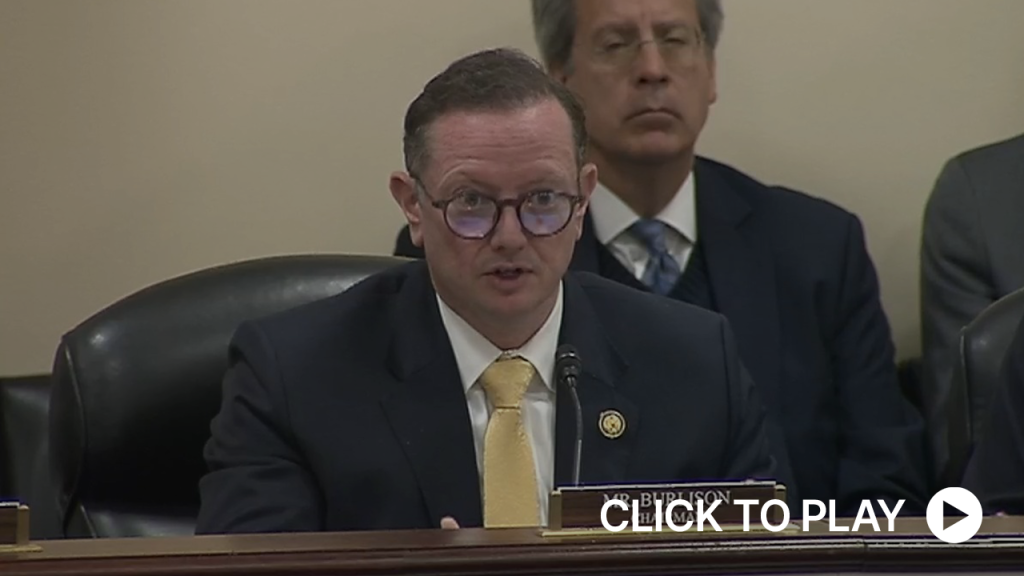
Subcommittee Chairman Burlison: “Ms. Onwuka, last September, the U.S. Census Bureau reported that nearly half of U.S. renters were cost-burdened, meaning that they spend more than 30 percent of their income on housing costs. As Americans often rent for years before buying their first home, how might this be a very heavy burden on so many? How has this become such a heavy burden on Americans? And I say that, you know, we’ve seen the increase in housing costs, but we’re not talking about the increase in health care costs, which is also crowding out dollars from people’s pocketbooks, where health care inflation and health care premiums are more than double what they were even adjusted for inflation today. So people have fewer dollars to spend.”
Ms. Onwuka: “Well, absolutely. I mean, when you look at a record, 22.4 million renter households paid more than 30 percent of their income on rent. That’s a lot. Half of those spent more than 50 percent of their income on rent. So when you have half of your income going to rent, then you have to pay for utilities, and you have to pay for transportation and feed yourself, that leaves less for you to be able to put money away for savings and for that downpayment. And as I talked about, when it comes to women, women struggle. Women take out bigger loans because they have less to put down, from [a] downpayment standpoint. And so, as you free up more income for an individual through rising wages and tax cuts, [you] leave more of their hard-earned dollars. And thank you for ending taxes on tips and taxes on overtime that allows people to put money aside for things like a downpayment.”
Rep. Clay Higgins (R-La.) asked how property insurance creates financial difficulty for families and drives up housing costs.
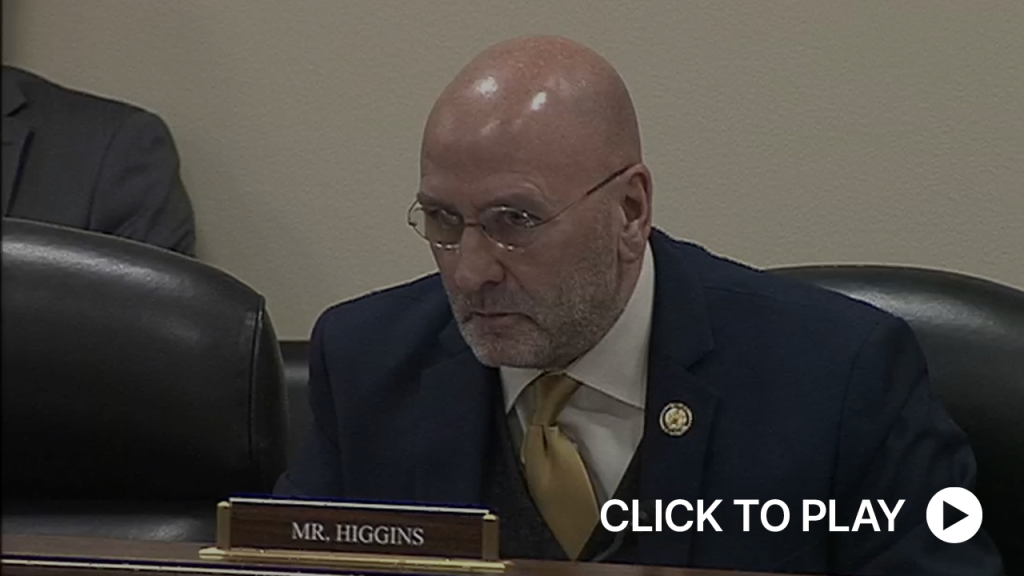
Rep. Higgins: “Home prices go up and down. They trend up and down. Interest rates trend up and down. But the insurance always trends up. Mr. Hughes, property insurance, availability of legitimate property insurance providers, the lack thereof, especially in regions of our country that are prone to natural disaster, like Florida. For the gentleman from Florida, for me, when we shop for property insurance…I believe if it was market driven—and this may be where the federal government can have an effective intersection with the free market—how affordable would homes be if property insurance was more readily available in your industry, Mr. Hughes?”
Mr. Hughes: “Property insurance and cost of has gotten way out of hand. And we have builders, our members, building in areas for a specific market or price point.”
Rep. Higgins: “There you go. So like in our case, our mortgage is less than our insurance on our home.”
Mr. Hughes: “Exactly.”
Rep. Higgins: “It’s insane.”
Rep. Scott Perry (R-Pa.) highlighted how extensive lobbying and special interest expands the international construction code and causes home prices to increase, and argued that the solution is not to give people more money.
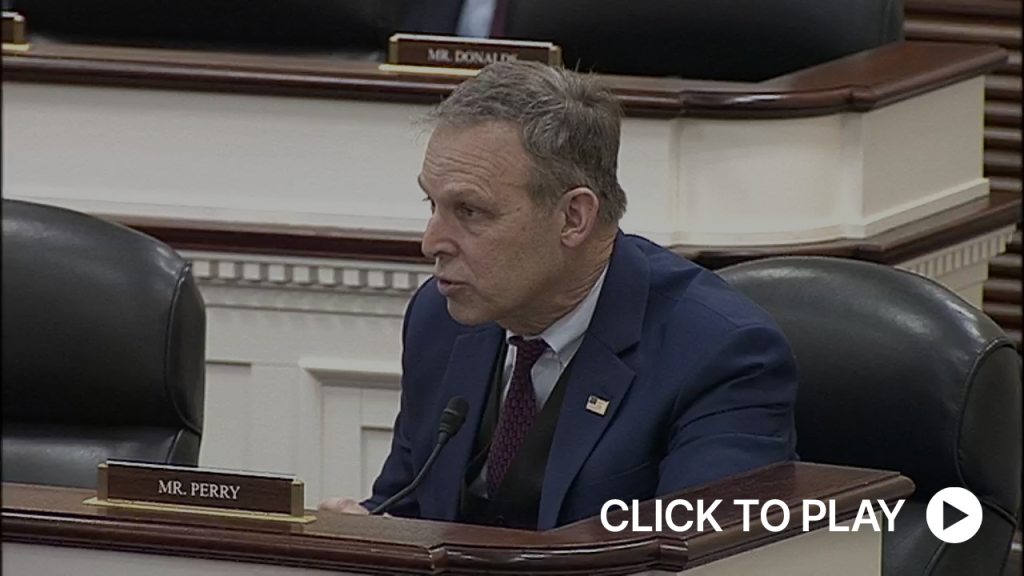
Rep. Perry: “Over the course of my time, I spent some time on my local planning commission. I was the chairman of the board, and I watched the international construction code go from something about this big, I don’t know, 801,000 pages now, 800,000 pages. And do you know how things are added to the international construction code?”
Ms. Onwuka: “I can imagine lots of lobbying.”
Rep. Perry: “It’s a lot of lobbying and special interests. And if you’re the right group or organization, you can come in for the vote and vote for things to be put into the code, which then your local jurisdiction subscribes to and mandates…The cost of all this has gone up because the government thinks that the local, state and federal level that we know what people need. And unfortunately, the answer from my colleagues on the other side of the aisle is always some kind of ‘give people money to afford all that stuff, take money from you and give it to them. They [can] afford all that stuff or [we can] ban stuff.’ And I just don’t see it changing.”
Click here to watch the hearing.