After Massive Fraud Exposed in Minnesota, Subcommittee Chairman Sessions Opens Hearing on Curbing Fraud in Federal Programs
WASHINGTON—Subcommittee on Government Operations Chairman Pete Sessions (R-Texas) delivered opening remarks at today’s hearing on “Curbing Federal Fraud: Examining Innovative Tools to Detect and Prevent Fraud in Federal Programs.” In his statement, Subcommittee Chairman Sessions highlighted how fraudsters use oversight loopholes in federal programs to commit fraud and emphasized the importance of detecting fraud before it happens—like the fraud witnessed in Minnesota’s social services programs. He also urged Congress to find solutions for how to transition the Pandemic Response Accountability Committee (PRAC) from pandemic-focused efforts to government-wide fraud detection and prevention efforts.
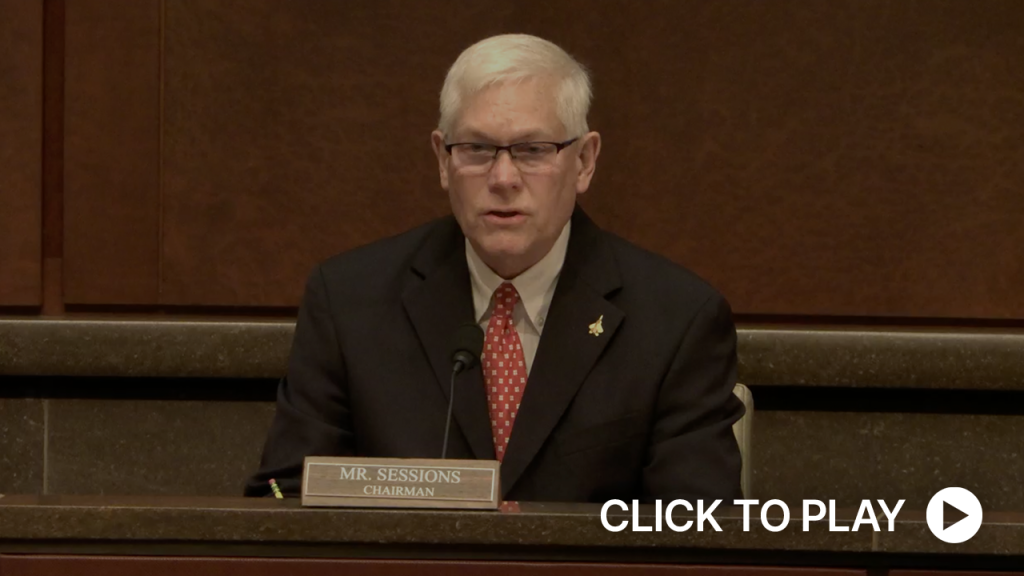
Below are Subcommittee Chairman Sessions’s opening remarks as prepared for delivery:
Welcome to today’s hearing on innovative tools to detect and prevent fraud in federal programs.
Last week we spent time highlighting a significant problem in state-administered programs.
We exposed expansive fraud in Minnesota that went largely ignored until brave whistleblowers stepped forward.
We saw that fraudsters were getting smarter and richer at the expense of American taxpayers.
These bad actors were exploiting loopholes in oversight leaving all of us to ask, “why wasn’t it stopped earlier? Why did we just now catch it”
Today, we’re here to do the important work of finding a solution to this very important, persistent problem.
Last March, this subcommittee examined why fraud wasn’t stopped earlier and learned that agencies are not incentivized to prevent fraud.
They are incentivized to make quick payments and try and figure it out later.
As we have seen countless times, this approach needs to change.
Fraud should be detected before it happens.
Government agencies must ensure that hard-earned taxpayer dollars are going to the right person for the right purpose from the start.
As we’ve seen recently in Minnesota, when there are no guardrails, bad actors enrich themselves on the taxpayer’s dime.
The Pandemic Response Accountability Committee was created to provide necessary oversight over pandemic programs.
We’re now entering a new era where this oversight has been expanded to other federal programs.
Over the course of the past few years, the PRAC has amassed data analytics capabilities that can show when bad actors are trying to hit multiple programs.
They can determine when IP addresses are connected or are too far away to be eligible for a specific program.
They can alert programs to pause and more carefully review submitted information before making any payments.
They do this all for free but not everyone knows about it.
A key collaborator in their efforts is Treasury’s Bureau of Fiscal Service which maintains the Do Not Pay system.
The Treasury is the last barrier before payment is sent out so they can initiate that pause before putting money into the wrong hands but they are not allowed to do so.
Collaboration is key, however, there are some legislative challenges that, if resolved, could strengthen the efforts to detect and prevent fraud.
Currently, the PRAC is housed within the Council of the Inspectors General on Integrity and Efficiency, and its operations were extended until 2034.
A permanent solution that maintains the analytical capabilities they have built over the past six years is needed.
Treasury’s Do Not Pay system has access to a large number of datasets, but more are needed to ensure that the system is comprehensive and truly innovative.
As we discuss innovative tools and collaboration, it’s important that we also discuss not only how to make the best use of these tools, but what barriers need to be removed so that they can be used.
It’s important that we discuss what needs to change with program design so that agencies and programs are verifying the validity of information, not just confirming that documentation exists.
Today, we’ll hear from distinguished subject matter experts in the field who can help us understand what tools are available and what work needs to be done to make us better at detecting and preventing fraudulent payments before they happen.
In the coming weeks, I will be introducing legislation to address some of these issues—more specifically, the permanent solution for the PRAC—and I am eager to hear more from our witnesses about opportunities that exist to promote financial transparency and integrity.
I look forward to a very thoughtful discussion and collaborating with the Ranking Member on next steps.