Burchett Opens Roundtable on Deleting Duplicative Federal Programs
WASHINGTON—Subcommittee on Delivering on Government Efficiency Chairman Tim Burchett (R-Tenn.) delivered his opening statement at today’s roundtable titled “Doing More With Less: Deleting Duplicative Programs.” In his remarks, Subcommittee Chairman Burchett highlighted that the federal government spends around $7 trillion dollars annually on more than 2,400 federal assistance programs, which is more than twice the number of programs that existed in the 1970s. He also that a vast and outdated network of federal and state welfare programs create environments for fraud to flourish and emphasized that Congress must work to eliminate the duplicative programs wasting Americans’ tax dollars.
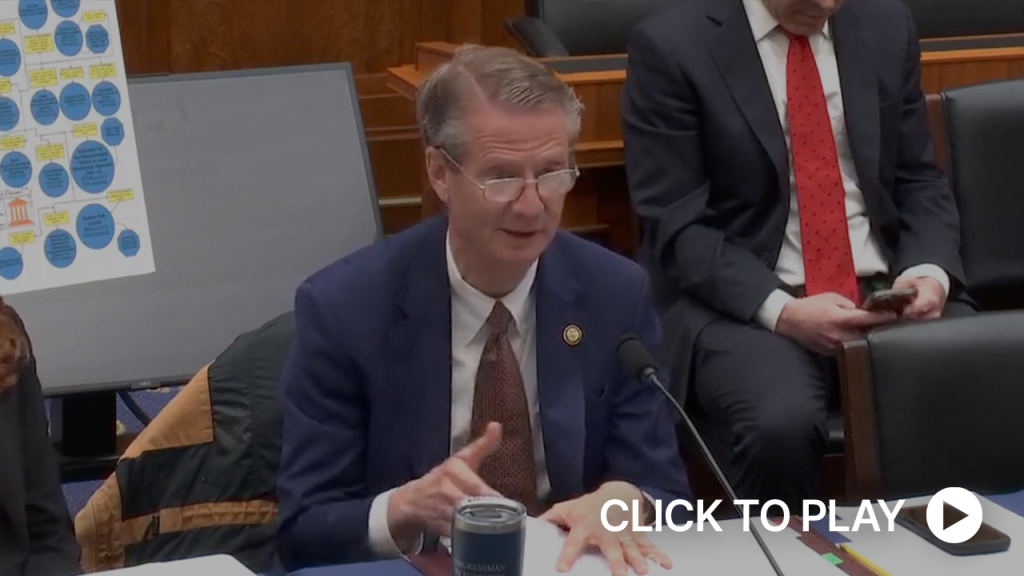
Below are Subcommittee Chairman Burchett’s opening remarks as prepared for delivery:
Good afternoon. I’m excited to host everyone at my first roundtable event of the Delivering on Government Efficiency (DOGE) subcommittee.
I intend to do all I can with this subcommittee to rein in the spiraling deficits and $39 trillion in debt that threatens the fabric of our great Nation.
This issue impacts all Americans, Republicans and Democrats alike. I met recently with the Ranking Member, Ms. Stansbury. She and I agreed there are topics of bipartisan interest affecting this Nation’s fiscal future that this Subcommittee can take up.
That includes today’s topic – the vast swaths of duplication and overlap among federal programs and activities.
Today’s roundtable is a little different from a typical hearing and will be more informal.
We will not keep time, and I will not be recognizing Members to speak, as we typically do with hearings.
I hope this is an informal yet informative conversation between the members of our subcommittee and the subject-matter experts with us today. And I hope all of my colleagues feel empowered to ask questions along the way.
In recent decades, as federal spending has grown to $7 trillion annually, federal agencies and programs have spiraled out of control.
There is no official count of federal agencies, but more than 400 are listed in the Federal Register.
And the number of federal financial assistance programs rose from just over 1,000 in 1970 to more than 2,400 in 2023.
In a 2010 bill hiking the debt limit, Congress did something useful.
It tasked our legislative branch’s auditing agency, the Government Accountability Office (GAO), with reporting annually on duplication across the federal government and recommending what to do about it.
Since that time, GAO has chronicled a vast web of duplicative, overlapping and fragmented federal government activities. GAO has evaluated the extent of duplication in program areas ranging from social welfare to STEM education.
We’ve all heard about the massive fraud taking place across welfare programs in Minnesota and elsewhere. In fact, GAO has estimated that the federal government loses up to half a trillion dollars annually due to fraud.
One factor driving that fraud is a vast, outdated network of federal and state-administered welfare programs. While attractive to sophisticated fraudsters and transnational criminal organizations, the complexity makes it hard for low-income Americans the programs were created for to access intended benefits.
One of our guests today provided us this graphic showing the complex machine that is our federal welfare system.
How is the average American supposed to navigate this system when they have other responsibilities to their families?
GAO has recommended remedial actions that Congress and the Executive Branch could take to address duplication, streamline government, and save hundreds of billions of dollars.
And today we will discuss those recommendations as well as others from our guests.
I am now pleased to introduce our roundtable guests.
First, we have Orice Williams Brown. Ms. Brown is the Acting Comptroller General of the U.S. Government Accountability Office (GAO). She has led GAO since Gene Dodaro retired from the CG role late last year.
Next, we have Paul Winfree. Mr. Winfree is the President and CEO of the Economic Policy Innovation Center. He was Deputy Assistant to the President for Domestic Policy and the Deputy Director of the Domestic Policy Council at the White House.
Next, we have Matt Weidinger. Mr. Weidinger is a Senior Fellow and Rowe Scholar at the American Enterprise Institute. He was a long-time staff director of the House Ways and Means Subcommittee overseeing safety net programs.
Lastly, we have Bobby Kogan. Mr. Kogan is the Senior Director of Budget Policy at the Center for American Progress.