Hearing Wrap Up: ATF Must Ensure Record Retention Policies Do Not Violate Americans’ Second Amendment Rights
WASHINGTON—Yesterday, the Subcommittee on Federal Law Enforcement held a hearing titled “Oversight of the Bureau of Alcohol, Tobacco, Firearms and Explosives’ Out-of-Business Records Retention Practices.” During the hearing, members examined the Bureau of Alcohol, Tobacco, Firearms and Explosives’ (ATF) out-of-business records system to assess whether this system operates as a backdoor national firearms registry. Members also weighed the value of gun tracing against the right guaranteed by the Second Amendment and the implications of retaining out-of-business records in light of recent ATF rulemaking.
Key Takeaways:
ATF is amassing an enormous collection of firearm purchase records, raising Second Amendment and privacy concerns.
- Aidan Johnston, Director of Federal Affairs at Gun Owners of America, testified that “The ATF holds more than 1.4 billion records that identify which Americans own which guns. Those records are searchable, and they can be weaponized against law abiding gun owners for mass gun confiscation. Gun Owners of America spent years exposing ATF’s registry because it is a direct threat to the right of the people to keep and bear arms. Here’s how ATF’s registry works: After a firearm is serialized, the manufacturer records which dealer received it. The dealer then records which individual bought it using the information collected on the Background Check Form 4473 the buyer gives his or her full name, address, date of birth, height, weight and race. The dealer then records the make, model and serial number of the gun. What many gun owners do not realize is that when the dealer closes, every single firearm transaction record is sent to ATF. ATF then digitizes these transaction records into a centralized database.”
ATF claims its proposed records retention rule helps law enforcement, but it could have significant implications for Americans’ privacy and Second Amendment rights.
- ATF’s proposed rule would cap out-of-business records retention at 20 or 30 years. However, the two retention periods effectively stack: a record could sit with a dealer for 30 years, then with ATF for another 30, meaning the personal information and firearm purchase history of a law-abiding American could remain in government hands for up to 60 years.
- Wally Nelson, retired ATF Deputy Assistant Director, testified that “The purpose of ATF record keeping and the [National Tracing Center] out of business records process is to provide information and support of federal, state and local agencies, law enforcement agencies and their fight against crime and violence. In support of that effort, the NTC traces firearms 24 hours a day, seven days a week. The ATF has proposed to change the record retention requirement for dealers from the current permanent regulation to 20 or 30 years. ATF had a 20-year requirement from 1985 to 2022. In 2022, the regulations were changed to make them permanent. ATF’s own data that they wrote up in the [Notice of Proposed Rulemaking] for this proposed change indicated that the number of traces coming on records that are over 20 years old has been reduced quite a bit in the last 15 years.”
- Christopher Chiaffulo, Founder and National Coordinating Counsel at FFLGuard, testified that “The proposed rule would replace indefinite record retention with defined limits, limits that were already addressed 40 years ago, and that this industry already successfully navigated from 1985 to 2022, using a 20-year records retention window. Most importantly, the proposed records retention rule would set corresponding limits on how long ATF can retain those records at the NTC, the National Tracing Center, before their destroyed.”
The Subcommittee on Federal Law Enforcement is examining how to balance legitimate law enforcement needs with the constitutional rights and privacy interests of law-abiding Americans.
- Policymakers must determine whether retaining a collection this large, reaching back decades, is worth the potential risks to law-abiding Americans’ privacy and the right guaranteed by the Second Amendment.
Member Highlights:
Subcommittee Chairman Clay Higgins (R-La.) exposed how current ATF record retention practices creates a database that is searchable by name.
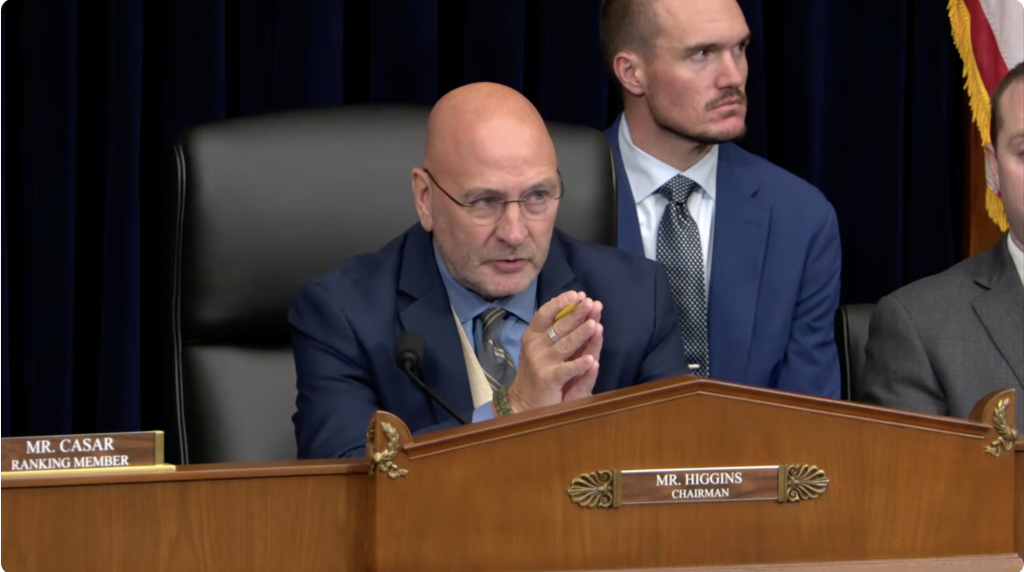
Subcommittee Chairman Higgins: “So these records are continuously coming into ATF. It’s a hell of a lot of manpower and energy being invested to add to the already existing 1.4 billion digital records that we have on file. And is it true, Mr. Nelson? Mr. Johnston? Mr. Chiaffulo… is it true that with very easy IT adjustment, this record compilation will be searchable by name. Is that true, Mr. Johnston?”
Mr. Johnston: “Yes. This this weekend I wrote a program using––“
Subcommittee Chairman Higgins: “Is that true, Mr. Nelson?”
Mr. Nelson: “It could be, I don’t know. I’m not a computer expert.”
Mr. Chiaffulo: “ChatGPT gave me directions on how to get here today, Mr. Chairman. So I think anything’s possible.”
Rep. Andy Biggs (R-Ariz.) asked whether searching firearm owners by address turns the ATF’s firearm owner database into a registry.
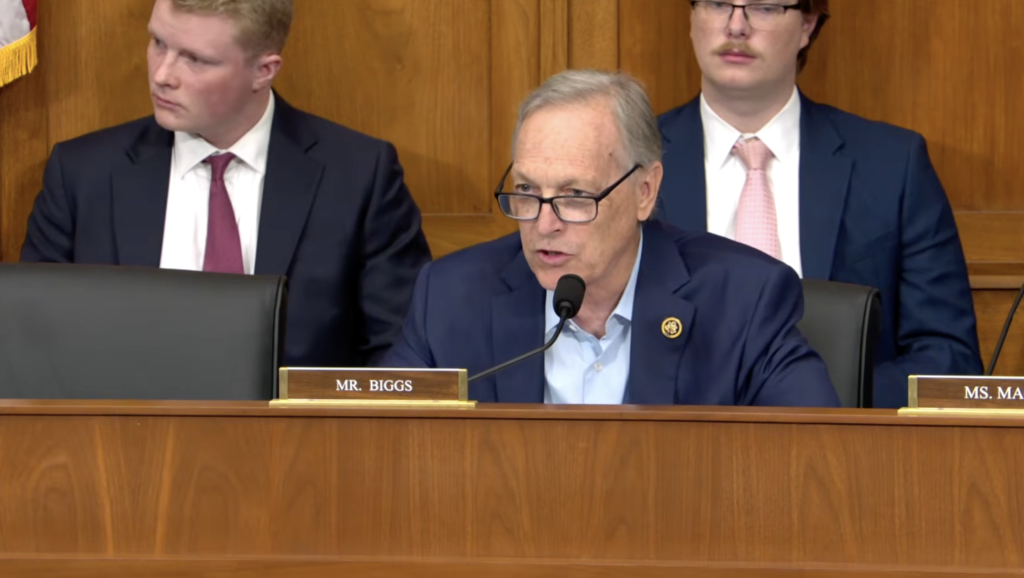
Rep. Biggs: “Our founders understood that an armed citizenry is essential to preserving a free nation. That’s why they enshrined the Second Amendment in the Constitution, protecting the right to keep and bear arms as a safeguard against foreign threats, government tyranny, and the erosion of liberty…I’ll just remind you that the reason that FISA, the Foreign Intelligence Surveillance Act, is so dangerous is because it is a database that is searchable and abused. And so we on this Committee have been fighting to restrain that government surveillance ever since I came to Congress and have been unsuccessful. But there’s been loads of abuses there. So let’s find out here. Do we actually have a registry? I mean, Mr. Johnston, you talked about this database as a database; they’re accumulating information putting into database, right?”
Mr. Johnston: “That’s correct.”
Rep. Biggs: “And they’re putting it in, and the very purpose of that database is to make it searchable. Is that not true?”
Mr. Johnston: “It’s to know who owns the gun so it can be traced.”
Rep. Biggs: “Right. So that doesn’t work if it’s not searchable, right?”
Mr. Johnston: “Correct.”
Rep. Biggs: “And everyone who has testified here today has said this database is searchable. What makes it a registry? Is it a registry? If it’s if it’s searchable by address only, is it a registry? If you if it’s searchable by make model and serial number, and all four of those things are where it’s currently searchable. Is that not true, Mr. Nelson.?”
Mr. Johnston: “That’s correct. And that’s all you need to say, ‘confiscate AR-15s.”
Rep. Biggs: “Mr. Nelson?”
Mr. Nelson: “I don’t know that that’s true. My understanding is that they have––it’s a flat tiff file, and it goes into a file of all the images of the records for that FFL. And when they get a trace, they have to go through them one at a time to find the file.”
Rep. Biggs: “So you’re saying it’s not searchable?”
Mr. Nelson: “I don’t believe so, sir.”
Rep. Biggs: “You just described a way to search it.”
Mr. Nelson: “Shuffling through, going through the reels of the record, the individual photos or optical scans to find the firearm they’re looking for.”
Rep. Biggs: “Right, so what they’re doing, they’re looking––another word for that would be searching––to find the information they want. That makes it a searchable database.”
Rep. Michael Cloud (R-Texas) asked about the ways ATF could digitize records to create a searchable database and national gun registry.
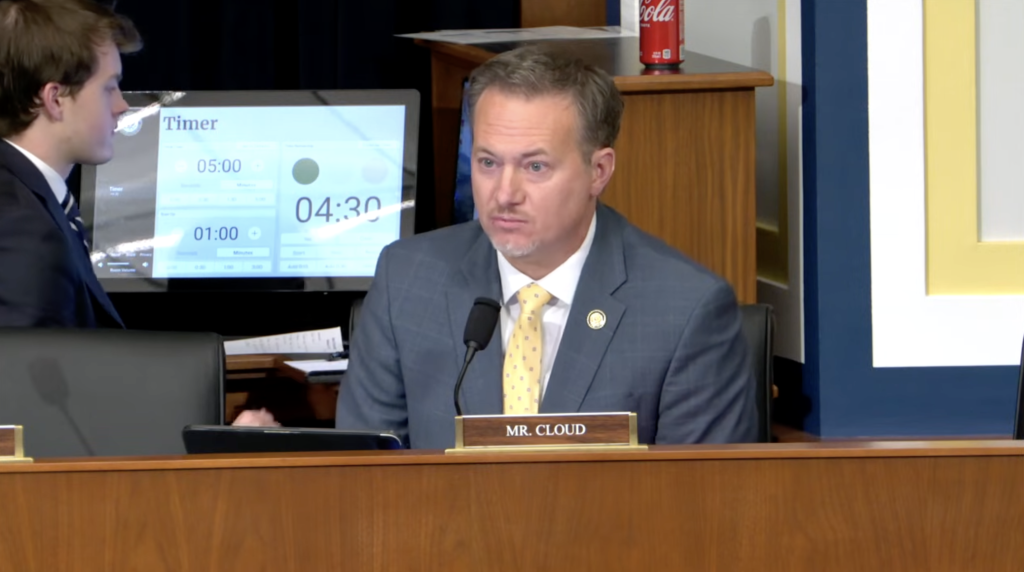
Rep, Cloud: “[The number of gun records has] grown to about 1.4 billion. One of the ways we got there was in between this period, and that was the Biden Administration, which took the 20-year limit and extended it forever, then placed a zero-tolerance policy on FFLs and began to intimidate them to force them out of business so that they could collect the gun records, it would seem, to grow the database. And then we’re told that this is not a searchable database, it’s not a registry. It’s definitely a searchable database. And they’ll say, ‘oh, well, we’re not scanning the name.’ I’ve gone and I’ve actually watched them scan the documents in. They scan the names and it’s a patch that they basically place in the software to keep the name from kind of being withheld, but that seems like it could very easily be solved. Mr. Johnston, can you speak to how easily this would be to change that paradigm?”
Mr. Johnston: “So it would be very easy to change this into a digital––into a completely searchable database by name, by address. It’s been said already. These are kept in like TIFF files, a type of image with no data, and it’s accompanied by metadata, and all ATF would have to do is rescan the images using optical character recognition in order to get all of the data that’s written on each page.”
Rep. Cloud: “Well, now in the world of AI––“
Mr. Johnston: “I wrote a little software, the ATF could convert them all in about an afternoon using federal government technology.”
Rep. Andrew Clyde (R-Ga.) noted that the Biden Administration violated the Firearm Owners Protection Act, which prohibits the creation of a national firearms registry
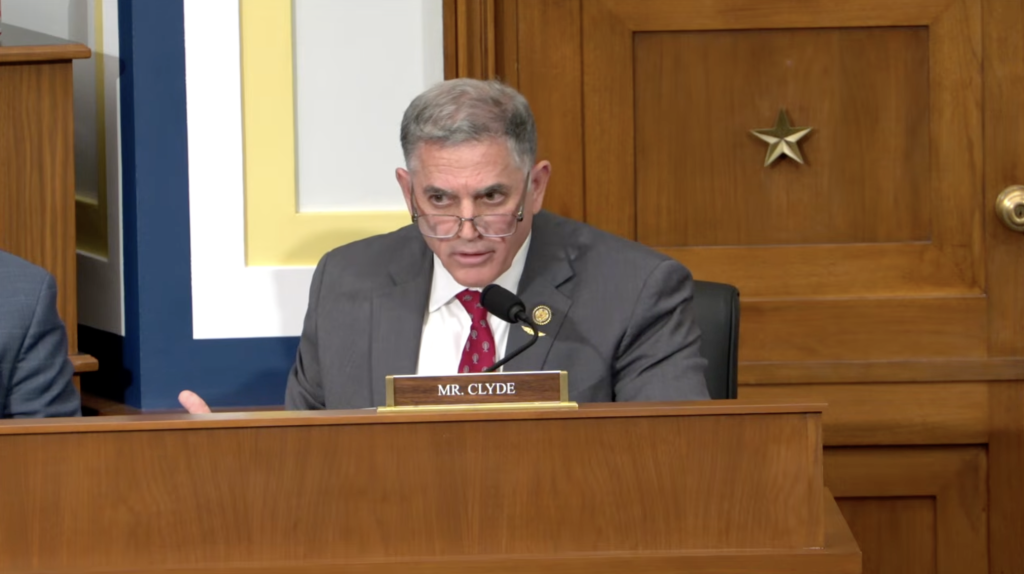
Rep. Clyde: “[C]ongress has already spoken out on this matter through the Firearm Owners Protection Act, which bars and I quote, ‘any system of registration of firearm, firearm owners or firearm transactions or dispositions.’ It also prohibits the recording of out of business records…So it prohibits two things. It prohibits: one, the recording of the records, and, number two, the creation of a system of registration of firearms. That is the Firearm Owners Protection Act. That is the law. That’s today’s law. So question for each of you. Or, Mr. Johnston, for you first. Am I reading this wrong? [Does] that not seem like there’s a prohibition on recording of records?”
Mr. Johnston: “There is a prohibition and President Biden directly violated with a new rule.”
Mr. Chiaffulo: “It would definitely seem that way, yeah. Absolutely.”
Mr. Clyde: “All right. Thank you. Furthermore, a permanent appropriations rider, and I’m an appropriator, prohibits the ATF from spending money on, quote, ‘consolidating or centralizing dealers records within the Department of Justice.’ Read together, these two provisions explicitly block the ATF from digitizing records at all, no matter how long the agency keeps them…yet the ATF’s proposal on the length of records kept does not address either law.”
Click here to watch the hearing.