Hearing Wrap Up: Federally Funded Homelessness Services Are Rife with Fraud and Failure
WASHINGTON—Yesterday, the Subcommittee on Delivering on Government Efficiency held a hearing titled “Fixing Fraud and Failure in Federally Funded Homelessness Services.” During the hearing, members assessed how misguided homelessness prevention policies implemented by left-wing states and localities are wasting federal, state, and local taxpayer dollars, while enriching left-wing nonprofits. Members also highlighted the city of Los Angeles as an example where public spending is simply perpetuating the cycle of homelessness.
Key Takeaways:
American taxpayers are footing the bill for failing programs that continue the homelessness crisis.
- Jonathan Choe, Journalist and Senior Fellow at the Discovery Institute, testified that “Problem is, life is now imitating art, and the cycle continues, with more taxpayer dollars being wasted on questionable public health policies tied to housing first. Most of these buildings are considered low barrier. That means drug use is allowed behind closed doors, and staff look the other way. Then on top of that, you can pick up these so-called harm reduction kits at the front desk. Let me show you briefly what’s inside. Mr. Burchett. You refer to the meth pipes that you can easily get, but this baggie given out at King County public health, just minutes from the Seattle space needle, is called a party pack. You can get a free meth pipe, you can get a tourniquet. You can get countless needles inside. You can get fentanyl test strips. You can get cookers. They’re giving away free drug supplies like candy in the name of harm reduction. And preventing disease with zero oversight and rarely any offers for addiction treatment. In reality, critics say that this is enabling instead of helping. And now people are dying at higher rates behind closed doors of fentanyl overdoses.”
- Paul Webster, Senior Fellow at the Cicero Institute, testified that “From Mayor Bass’s office that greenlit $27 million in taxpayer grant funds to buy a property from a business, purchasing almost simultaneously for $11 million. It’s not just LAHSA’s ownchief executive that signed $2.1 million in contracts with the nonprofit that employs her husband, after telling the public she was completely recused from such dealings. It’s the poorly crafted, expensive and unworkable system Congress created that was supposed to end homelessness in 2023. This is what happens when billions flow to a network of nonprofits over which no state or local government has authority that measures inputs, beds, salaries and services billed rather than on whether anyone left the street. It took [Department of Housing and Urban Development] roughly a decade to determine that Los Angeles was wasting its awards. Thousands of homeless people died in the meantime.”
Los Angeles is a case study of failed policy, fraud, and mismanagement that has been left unchecked for too long.
- Mr. Webster also testified that: “Last year’s point in time count found nearly 70,000 homeless people in Los Angeles, 44,000 were unsheltered, 27,000 were chronically homeless, and six of them die on the street every day. No region in America has more unsheltered people, and no region receives more federal homeless assistance. Los Angeles has taken in $2 billion in federal funds in federal funds since 2005, including $220 million in 2024 in continuum of care awards. Its awards are up 213 percent. The city and county have budgeted another $4 billion of their own money since 2022. Here’s what that bought since 2009, the year the Hearth Act reformed federal homeless assistance programs, overall homelessness in Los Angeles doubled, unsheltered homelessness grew 130 percent, chronic homelessness rose 20 percent, and homelessness among people with serious mental illness rose 90 percent. There is more money than ever before, more capacity than ever before, and more and sicker people on the streets than ever before. That is the record.”
The Trump Administration has been working to reverse failed policies that perpetuate the cycle of homelessness.
- Mr. Webster urged members of the Subcommittee to “Reform the continuum of care program in three ways first, stop funding and empowering entities that voters cannot reach route homeless assistance through states and their agencies, which answer to an electorate rather than through unaccountable regional nonprofits. Nonprofit consortiums have failed to solve homelessness for the last ten plus years, and, when challenged, demand more money to continue their ineffective research-based programs. Second, direct HUD to monitor and to act. Audit findings of mismanagement should not sit for a decade. Performance should be demanded annually because lives are on the line. Third, fix the definition federal law and regulation redefines a person as no longer homeless when their names appear on a subsidized lease, advocates claim they know how to end homelessness, but it is this definitional gimmick that is the basis for that claim.”
Member Highlights:
Subcommittee Chairman Tim Burchett (R-Tenn.) asked about the number of homeless people who are mentally ill or addicted to drugs and how cities may be enabling these individuals to continue harmful habits rather than providing meaningful help.
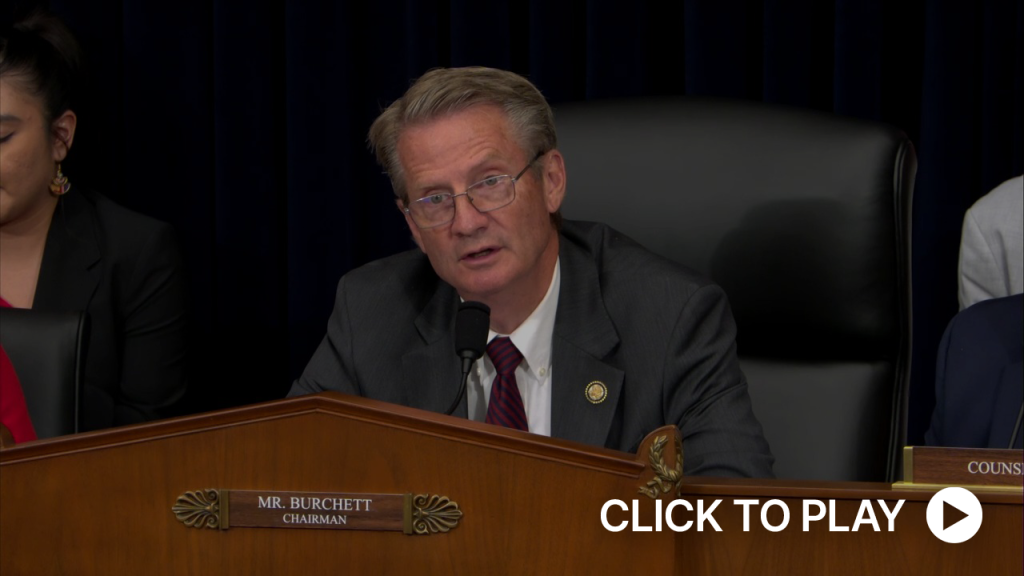
Subcommittee Chairman Burchett: “What portion of the homeless people you encounter living on the streets are drug addicted, mentally ill or both?”
Mr. Choe: “I would say eight out of ten.”
Subcommittee Chairman Burchett: “Did these individuals simply lack affordable housing?”
Mr. Choe: “No, not at all.”
[…]
Subcommittee Chairman Burchett: “Do you feel like the politicians in cities like LA and Seattle are sympathetic to these folks plight, or do you think it’s— well, let me back up to small businesses. Do you think there’s some [that are] sympathetic to them? It seems like in those areas they’re just kind of overrun with trash and filth and, and folks that are just laying on their curbs.”
Mr. Choe: “Yeah. I can’t get into the hearts and minds of these politicians who are presiding over these issues right now. But I do know that many have no immediate solutions. All they’re doing is doubling down on the current plan, and the current plan is not working.”
Subcommittee Chairman Burchett: “Thank you. That gets to my next question for Mr. Webster. Do you feel like these entities that aren’t solving or reducing these problems, shouldn’t their funding be tied to some sort of performance? And how would that be measured? You have to do that pretty quick.”
Mr. Webster: “Yes, sir. I do believe it should be tied to performance. I…should the performance should be measured by various outcomes such as increased incomes, successful referrals and completions to treatment, mental health stability, reductions in arrests or engagements with law enforcement. Family reunification is a great metric to that covers a whole number of challenges.”
Rep. Eric Burlison (R-Mo.) asked about nonprofits profiting off the homeless industrial complex.
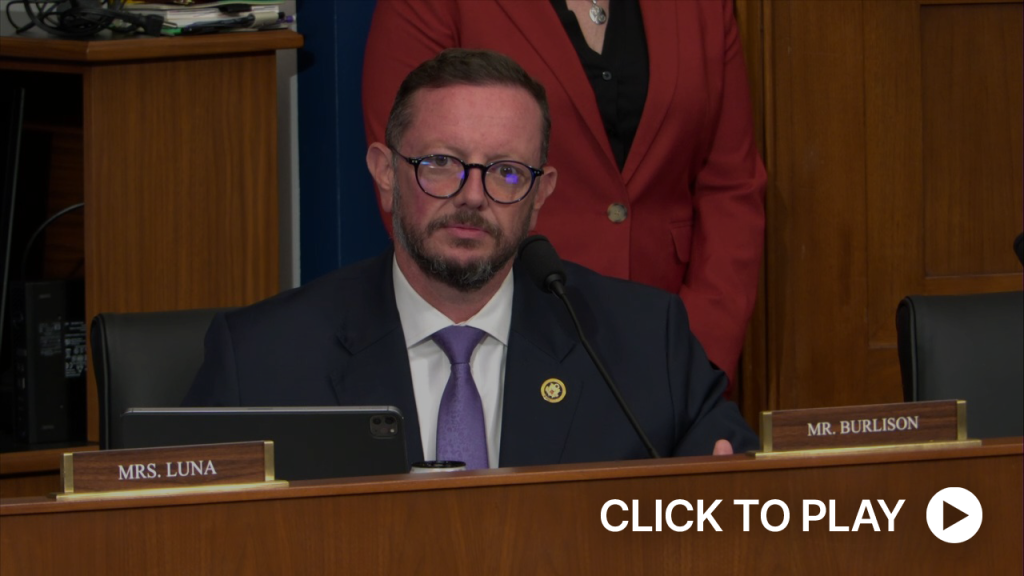
Rep. Burlison: “Mr. Choe, I want to ask a question. You’ve mentioned that we have a homeless industrial complex. Would you agree with that statement? Is that what you’ve said? But in the past.”
Mr. Choe: “Yes, sir. And so has HUD Secretary Scott Turner.”
Rep. Burlison: “What first, in your firsthand investigations, what are you what are you seeing in that in that way?”
Mr. Choe: “Could you repeat your question?”
Rep. Burlison: “So, in your investigations, are you seeing people, like, are you seeing entities or these nonprofits, are they getting rich off of providing these services?”
Mr. Choe: “Yeah, absolutely. Especially their top CEOs and executives. Many of them are making high six figure salaries. And the staff are also making six figure salaries. And they’re holding fundraisers where they’re raising millions of dollars. Yet, as this, [Subcommittee] noted, we don’t see the results. There’s record homelessness on the streets, record drug overdose deaths. Meanwhile, these nonprofits are lining their pockets. And of course, there are good ones out there as well, especially the faith-based nonprofits where they take a different approach from housing first and harm reduction. And the focus again, should be more on recovery and treatment, and that is where we’re seeing a lot of success on the streets.”
Rep. Nancy Mace (R-S.C.) inquired at how much money the City of Los Angeles has spent on homelessness programs over the past year and how misguided programs have fueled rampant drug use among homeless populations.
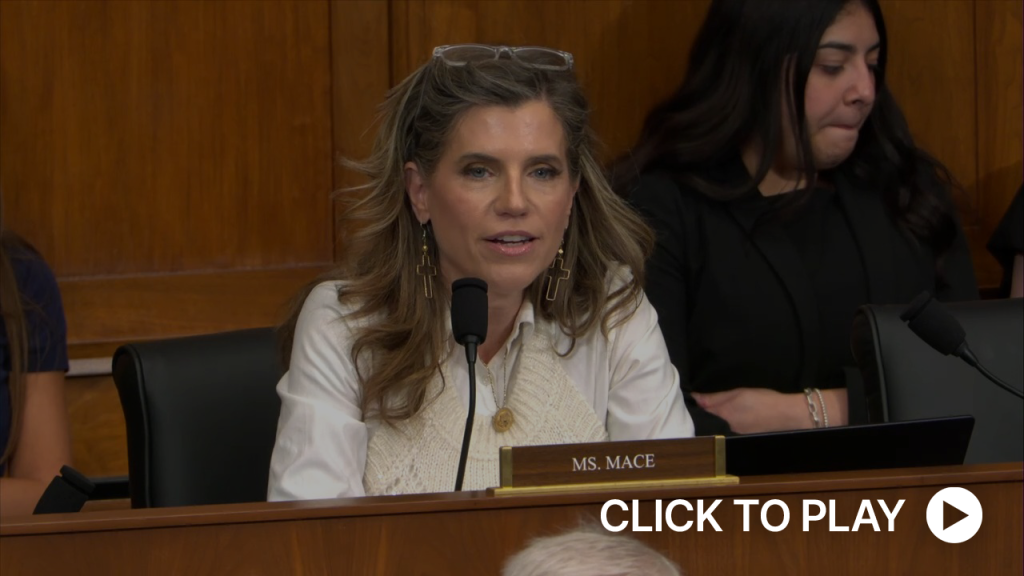
Rep. Mace: “So my first question goes to Mr. Webster today. Since 2025, how much money has Los Angeles spent on combating homelessness over the last year?”
Mr. Webster: “Thank you for the question. So, since 2025, well, in 2024, $240 million [was] provided by the federal government to Continuum of Care. 2025 was just a little bit more than that, but they didn’t do it through a competition because there was a lawsuit involved. The City of Los Angeles provides its own money.”
Rep. Mace: “How much is that?”
Mr. Webster: “[I testified about that] a little earlier. It’s about $4 billion between the city and the county.”
Rep. Mace: “Of all the money that’s been spent since 2025 on homelessness…What did you call it? Continue care? [What] is that?”
Mr. Webster: “Continuum of Care program is the chief program.”
Rep. Mace: “That’s the name of the program? Continuum of Care, like it’s health care for drug addicts, I guess? Of the over $4 billion and change, how much is how much is that per homeless person in LA?”
Mr. Webster: “I don’t have that number off the top of my head, but it’s a lot.”
[…]
Rep. Mace: “As I said, why are we spending so much money and getting so little out of it? Why is homelessness growing for every extra dollar we spend? Why is that?”
Mr. Webster: “Well, I think in Los Angeles, it’s pretty clear that the Continuum of Care, the Los Angeles Homeless Services Administration has done a very, very poor job in managing its contracts, living up to the law and regulation in terms of having sufficient financial oversight, providing money to entities that do not provide services and also to underwriting.”
[…]
Rep. Mace: “One last question, I [have] ten seconds. How much drug paraphernalia is given out in these programs?”
Mr. Webster: “I couldn’t tell you that. But I can tell you what we see on the streets of skid row, and it is tons and tons of drug paraphernalia.”
Rep. Pat Fallon (R-Texas) grilled Samantha Batko, Senior Fellow at the Urban Institute, on the rise of homelessness in the United States despite more money being thrown at the issue, and highlighted how executives at nonprofits benefit the most.
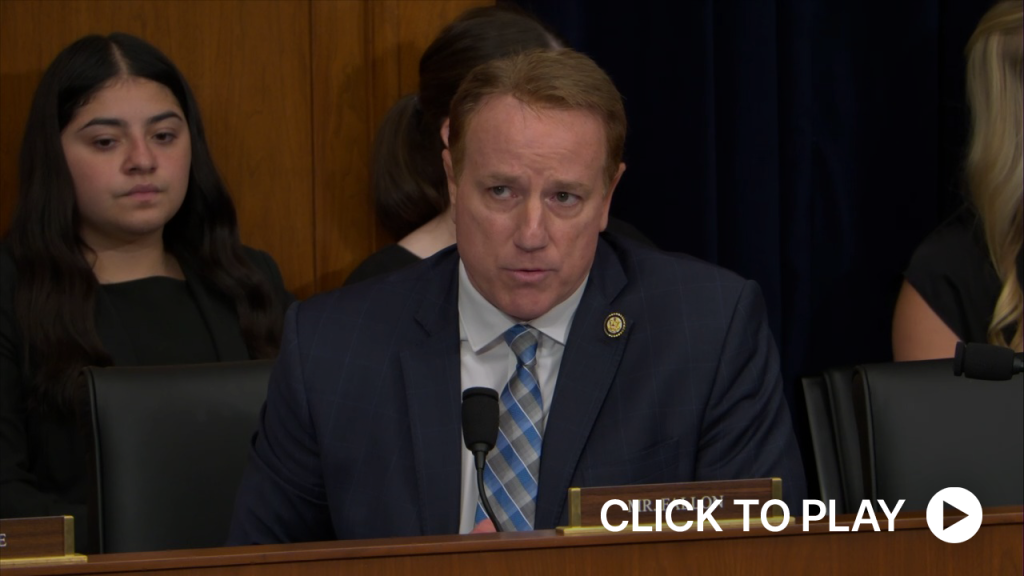
Rep. Fallon: “Okay, so I find it interesting that the federal government over the last two since 2007, that’s the first year that HUD had fully comparable national figures. And they’ve spent the federal government in answer to this question, $51 billion to combat homelessness since 2007, the State of California, their own auditor, said they spent $24 billion between 2018 and 2023. So, a fair estimate, if you want to go back to 2007, there’s probably about just in California, $40 billion. In LA County and City, about another [$10 billion]. So that’s $100 billion. And that’s not including the other 49 states. So, a pretty fair estimate would be probably in the neighborhood of a quarter of $1 trillion. So, let’s go back to the earliest year that HUD says we should be able to compare in 2007 to 2025. Miss Batko, do you think homelessness rose or fell?”
Ms. Batko: “Can you repeat the question?”
Rep. Fallon: “Year 2007 to ‘25?”
Ms. Batko: “It rose.”
Rep. Fallon: “It did rise by 15 percent. We dropped a quarter of $1 trillion. And what did we get for it? 15 percent increase in homelessness. Ms. Batko, you’re working for a 501c3, is that correct?”
MS. Batko: “Correct.”
Rep. Fallon: “What is your salary? What is your total compensation?”
Ms. Batko: “I don’t understand how that’s pertinent to this.”
Rep. Fallon: “Okay. So you’re not going to answer. We estimate it’s probably in the neighborhood of $200,000. Do you know how much your CEO, Sarah Wartell, makes?”
Ms. Batko: “Not off the top of my head.”
Rep. Fallon: “I do. It’s $971,063. How about your Senior VP of Research and Programs? $407,826. VP and Executive Director of Workrise? $397, 461. Chief Operating Officer? $377,915. Senior VP, Impact and External Affairs? $376,572. Institute of Fellow Research? $349,939. VP, Controller and Treasurer? $292,576. So yeah, some people have been very successful in the last 18 years ‘combating homelessness.’ They’re getting rich off it. If your CEO—why don’t we want to take those numbers back to about 18 years? She’s probably made in the neighborhood of $15 million. Ms. Batko, is it a good or bad outcome for a human being to do crack cocaine?”
Ms. Batko: “Bad.”
Rep. Fallon: “I agree, good or bad outcome to use heroin?”
Ms. Batko: “Bad.”
Rep. Fallon: “I agree as well. So, you would agree that it’s a negative outcome if this human being does any hard drugs for themselves, the community, and society as a whole. Agree?”
Ms. Batko: “I believe that drug use is damaging to people and communities.”
Rep. Fallon: “So a negative outcome for those three, I would think. I don’t want to put words in your mouth. So, is it a good use of taxpayer dollars to fund crack pipes?”
Ms. Batko: “I’m not an expert in substance abuse treatment.”
Rep. Fallon: “It’s a really simple question. I think you got trillions of brain cells between your ears the good Lord gave you. Do you think it’s a good or bad use of taxpayer funds to you to buy crack pipes for homeless people?”
Ms. Batko: “Congress determines what money is—”
Rep. Fallon: “Okay, so we’re not going to get an answer there. How about fentanyl needles?”
Ms. Batko: “What’s the question?”
Rep. Fallon: “Do you think it’s a good or bad use of taxpayer dollars to fund fentanyl needles for the homeless?”
Ms. Batko: “I think that Congress decides.”
Rep. Fallon: “Okay, so I would say I am in Congress and I say that’s a horrible use of taxpayer money. You’re exacerbating the problem. You’re not mitigating it. I find it disgusting that in your five minutes that you open with you never used or mentioned drug use once the core fundamental issues of homelessness revolve around drug addiction, alcohol abuse, and mental illness. Those are the things to be treated. And for my colleague to sit there and say that these folks, if they’re treated, they’re going to end up in prison. No, the most successful outcome is for them to get off the crack, get off the hard drugs, get their lives together because the government’s not going to do it for them. They have to do it for themselves.”
Click here to watch the hearing.