Hearing Wrap Up: Innovative Technology Can Lower Healthcare Costs for Americans
WASHINGTON—Today, the Subcommittee on Economic Growth, Energy Policy, and Regulatory Affairs and the Subcommittee on Health Care and Financial Services held a joint hearing titled “Lowering the Cost of Healthcare: Technology’s Role in Driving Affordability.” At the hearing, members examined the rising cost of healthcare in the United States and how the Biden Administration’s overbearing regulations contributed to this increase. Members also analyzed how innovative medical technology can alleviate this problem and actions Congress can take to facilitate these changes.
Key Takeaways:
Burdensome regulations imposed by the Biden Administration contributed to rising healthcare costs.
- Dr. Darius Lakdawalla, Chief Scientific Officer at the Schaeffer Center for Health Policy and Economics at the University of Southern California, emphasized in his opening statement that “[The] current approach to Medicare Advantage risk adjustment weakens, or sometimes even eliminates, incentives for long-term prevention. For instance, academic research shows that including pneumonia and risk adjustment coincided with reductions in the influenza vaccinations that help prevent pneumonia. That’s because risk adjustment insulates insurers from the cost of long-term illness and eliminates their financial rewards from preventing such illness. On the provider side, alternative payment models also encourage short-term thinking by limiting shared savings from prevention to just 12-month horizons.”
- Dr. Ziad Obermeyer, Blue Cross of California Distinguished Associate Professor of Health Policy and Management at the University of California, Berkeley, stated in his opening testimony that “When I started this work, it was so difficult to get the data that we needed here in the United States that I ended up doing this research in Sweden. That process took ten years, but it was still faster than doing it here, despite European data regulations. That is a real problem for patients who don’t know that they’re at high risk, and a problem if we want the United States to lead in health [artificial intelligence]. The major culprit here is the many layers of permissions and approvals required to touch health data. Most of that burdensome paperwork does not actually keep patients or their data safe, and it also opens the door to ideological bias.”
- Chris Jacobs, Founder of Juniper Research Group, noted in his opening testimony that “First, Obamacare has not met its stated objectives. The law singularly failed to achieve candidate Obama’s 2008 promise that his healthcare plan would, quote, ‘bring premiums down by $2,500 for the typical family,’ end quote. Individual health insurance premiums more than doubled in the law’s first four years of full implementation, and continue to rise faster than premiums for employer sponsored coverage. Meanwhile, the law encourages insurers to avoid the sickest patients, often harming those at most intended to help. Second, despite what some may believe, there’s a surprising amount of consensus bipartisan consensus about the law’s failure to control health care costs.”
Private sector technological innovation can revolutionize the medical industry and lower healthcare costs for Americans.
- Dr. Obermeyer testified that “A defibrillator implanted into the heart could save [patients’] lives, but doctors have trouble deciding which patients should get a defibrillator. And that means a lot of people die without a defibrillator. But it means something else, too. Two-thirds of the defibrillators that doctors actually put in never fire, never deliver a lifesaving shock, because the patients we thought were at high risk aren’t at high risk and never go on to develop those arrhythmias. That’s a $50,000 procedure with real risks. But in this case, zero benefit. My colleagues and I have built an AI system to help solve that problem. It looks at a patient’s electrocardiogram and estimates their risk of sudden cardiac death. And our early testing shows it does so far more accurately than what doctors are currently using to decide.
Congress should follow the Trump Administration’s lead and incentivize innovation to improve the delivery of healthcare across America at a reduced cost.
- Brian Whorley, Chief Executive Officer of Paytient Technologies. Inc. stated in his opening testimony that “Seniors should be able to opt in in real time when they need help the most when they’re standing in a moment of uncertainty at a pharmacy counter, instead of waiting 24 hours and making a return trip to the pharmacy. [This] technology exists. The technology exists to allow seniors to opt in in real time or near time, allowing them to simply get their meds when they need to.”
- Mr. Jacobs testified that “During open enrollment, 400,000 more people have signed up for exchange plans than did so at the same time last year, notwithstanding the impending expiration of the enhanced subsidies. These preliminary data suggest that the worst-case scenario cited by enhanced subsidy supporters have not come to pass, reinforcing why congress should let them expire. Instead, lawmakers should pursue alternative policies that will enhance insurance portability, realign incentives, and promote price and quality transparency.”
Member Highlights:
Subcommittee on Economic Growth, Energy Policy, and Regulatory Affairs Chairman Eric Burlison (R-Mo.) asked how burdensome regulations under the Obama and Biden Administrations have led to increasing healthcare costs and slowed innovation.
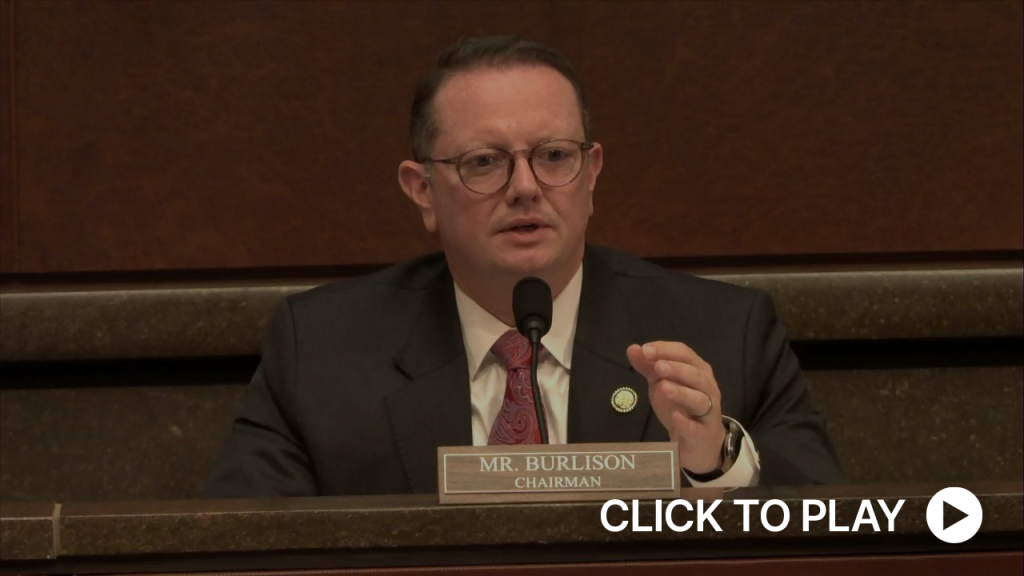
Subcommittee Chairman Burlison: “[Mr. Whorley], would you say that the status quo is propped up by the regulations that [Washington] has created, that really kind of that stop innovation like yourself, like what your company has provided?”
Mr. Whorley: “I think you know, the degrees to the extent that we can, you know. The best regulation is probably no regulation, the ability for us to innovate and have degrees of freedom to respond to the market and respond to the customers and partners that we serve. That’s what we’re attuned to.”
Subcommittee Chairman Burlison: “And how would you how would you say that your business under the previous administration, now that you’ve had ten months under [the Trump Administration], have you recognized any kind of change?”
Mr. Whorley: “In 2025 has been a transformational watershed year in that we have enabled, you know, nearly 20 million people to more easily access and afford care. We’re providing people the peace of mind and certainty and ensuring that uncertain moment that they’re standing in a pharmacy is something of the past. We’re giving them the ability to take care of themselves and their loved ones.”
Subcommittee on Health Care and Financial Services Chairman Glenn Grothman (R-Wis.) inquired about the rise chronic health issues in children and how rising healthcare costs fail to improve patient health.
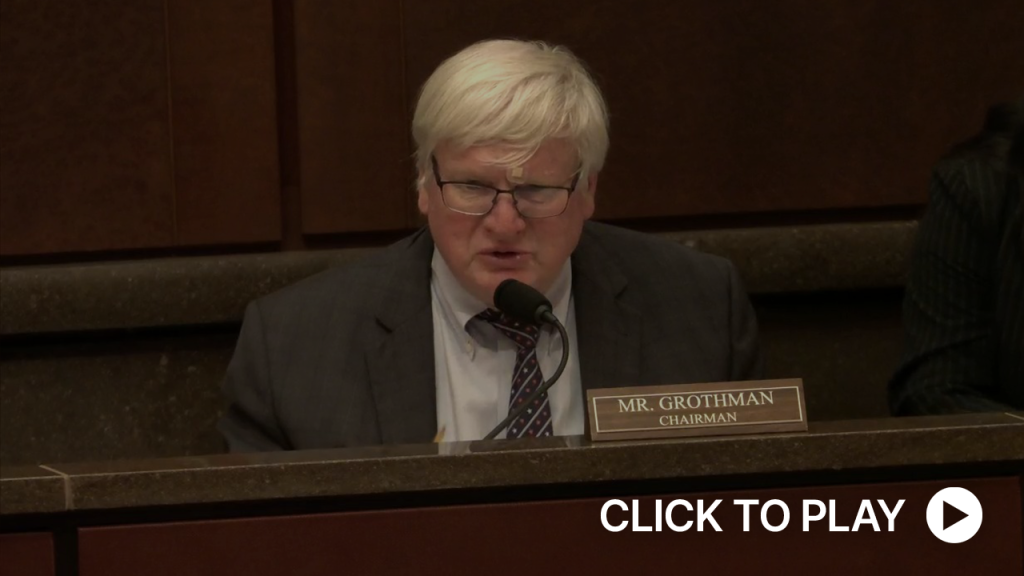
Subcommittee Chairman Grothman: “Not only are our children facing chronic diseases as rates never seen before, but the health care system seems to only get more expensive without any noticeable improvement in outcomes. Recent data published by the Trump Administration, and confirmed by several other independent sources, indicate that one-third of health care costs are wasteful and don’t improve patient health. I’m going to throw we’ll start with Mr. Jacobs. Why are one-third of health care costs wasteful and fail to improve patient health? Do you believe that’s true?”
Mr. Jacobs: “I certainly think there is a great amount of waste in in in the healthcare system. Unfortunately, we, as I mentioned in my testimony, we don’t have correctly aligned incentives. Everybody, if you know, the traditional example is the all-you-can-eat-buffet, everybody does a good job of spending everyone else’s money in healthcare. Now, obviously there are circumstances you’re not going to, you know, try to shop for care when you’re in an ambulance on the way to the hospital or anything else like that. But we do need to realign incentives at the margins to show where people can be smarter shoppers of healthcare. But first, that requires price and quality transparency. I’ve had personal difficulties myself on numerous occasions finding out what the heck things cost.”
Rep. Byron Donalds (R-Fla.) inquired about the impact of eliminating zero premium plans and single payer health care and implementing AI on the American health care system.
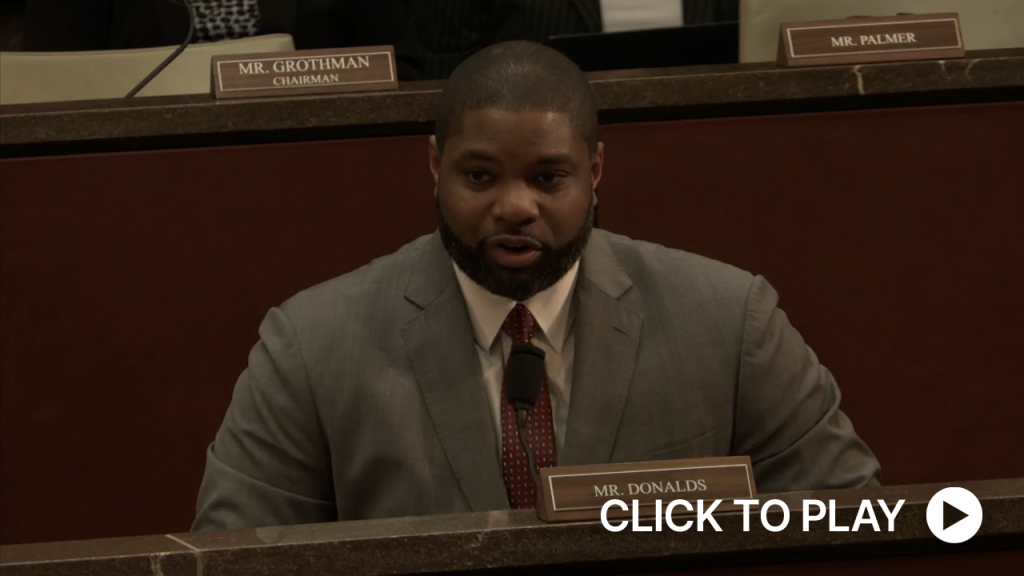
Rep. Donalds: “Single payer health care does not work. It never will. Because to the point of my colleague from the other side of the aisle, single payer is the very definition of vertical integration of the health care system, which will not lead to lower costs for the American people. But I digress. Mr. Jacobs, you referenced that a single Social Security number was linked to over 26,000 days of subsidized healthcare coverage across more than 125 insurance policies in 2023. What mechanisms can be put in place to detect and prevent this level of exploitation of taxpayer funds, and what underlying vulnerabilities contributed to this abuse?”
Mr. Jacobs: “Yes, Mr. Donalds, that’s correct. And the Government Accountability Office report that was released last week was just one of many data points suggesting that there are significant amounts of improper enrollment and potential fraud. On the exchanges, I think some of it is driven by…there are certainly rogue agents and brokers that have been acting and CMS both under the Biden Administration and certainly under the Trump Administration, have acted to crack down on that. I think eliminating zero premium plans, I think, is a matter of good policy that I think regardless, we should be asking everyone to pay at least a little bit of something towards their health insurance every year.”
Rep. Donalds: “Not to cut you off, but I want to acknowledge something that you just said. In your opinion, do zero premium plans lead to fraud and abuse?”
Mr. Jacobs: “I think without a doubt the system responds to incentives, and we’ve only had zero premium plans for the past few years under the enhanced subsidy regime. And we’ve seen that the amount the concerns about improper enrollments, whether it’s CBO or CMS with the data regarding zero claim, enrollees in exchange coverage, all of them have been pointing to increased incidence of improper enrollments and fraud.”
Rep. Donalds: “Okay, thank you for that. Mr. Obermeyer, if artificial intelligence becomes significantly integrated into medical practice, what impact should we expect on the health care workforce?”
Mr. Obermeyer: “I think what we’ve learned from the history of automation and technology adoption is that it doesn’t necessarily eliminate jobs—it actually changes the nature of those jobs. So, doctors will start to need to interact with these tools and learn from them. And I think they’ll start to augment the capabilities of especially nurses, community health workers, and others who can now have access to cutting edge technology applied to the data from patients to help them make better decisions.”
Rep. Donalds: “Real quick. A quick follow up to that. Do you think that the Affordable Care Act’s regulatory framework allows for this type of internal innovation in the healthcare system?”
Mr. Obermeyer: “I don’t know about the ACA specifically. I think right now there are not very strong incentives for a lot of health systems to adopt this AI technology. I think the access program that was recently announced from CMS is a good start in that direction by incentivizing preventive care, augmented by technology. But I think that government programs can do more by, for example, creating payment codes for AI technology that drives lower costs, higher value care, and even detects the kinds of fraud, waste and abuse that you mentioned earlier.”
Rep. Brandon Gill (R-Texas) inquired about how the Affordable Care Act (ACA) raised healthcare premiums for Americans and has made healthcare unaffordable.
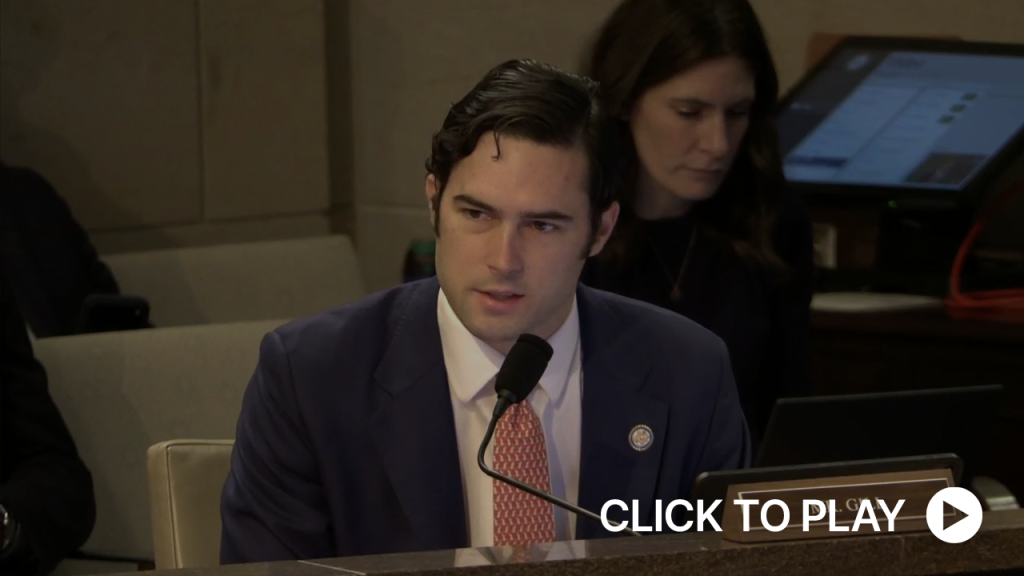
Rep. Gill: “Mr. Jacobs, I want to ask you about Obamacare. Obamacare was sold to the American people as a program that would drive down premiums. I think the number that was thrown out by President Obama at the time was $2,500. Has that promise come to fruition?”
Mr. Jacobs: “No, no, it has not. Congressman, in premiums on individual health insurance policies, on the marketplaces and exchanges more than doubled in the law’s first four years, and that’s primarily because of the regulatory mandates that the law imposed. And prices have continued, premiums have continued to increase substantially, and they continue to increase substantially, more so on the exchanges than for employer sponsored coverage.”
Rep. Gill: “So you would say that Obamacare didn’t slow the growth of premiums in any meaningful way?”
Mr. Jacobs: “I think, if anything, quite the contrary. I mean, Senator Welch, I believe in last month admitted on the on the senate floor that that the law failed to fail to reduce costs. But more than that, I think it’s accelerated the cost growth because of the consolidation that has come about in terms of hospital mergers, insurers buying [progressive benefits solutions], et cetera, et cetera.”
Click here to watch the hearing.