Hearing Wrap Up: Making Lifesaving Care More Affordable for Americans
WASHINGTON—Today, the Subcommittee on Health Care and Financial Services held a hearing titled “Unequal Treatment: Addressing the Drivers of Unaffordability for Oral Chemotherapy.” During the hearing, members examined the factors that have led to widespread out-of-pocket cost disparities between oral and intravenous chemotherapy. They also analyzed how Pharmacy Benefit Managers (PBMs) have largely driven these price and coverage disparities and explored potential solutions for alleviating burdens on Americans.
Key Takeaways:
Disparities in the way insurance companies and PBMs control and affect the prices of oral chemotherapy medications have caused them to be unaffordable for many.
- Ted Okon, Executive Director at Community Oncology Alliance (COA), testified that “Today, insurers and their pharmacy benefit managers place obstacle after obstacle between patients with cancer and the medications prescribed by their oncologists. Prior authorization all too often delays treatment; fail first step therapy can require patient to try and fail a plan preferred drug before receiving the therapy the treating oncologist believes is optimal. Restrictive formularies often exclude drugs or place them on unfavorable tiers. Patients can be forced into insurer PBM specialty and mail order pharmacies rather than receiving their medications directly from the oncology practice coordinating their care, and patients successfully receiving a treatment can face nonmedical switching simply because the insurer or the PBM changes its formulary. COA’s 2026 Survey of Community Oncology Practices found that more than 96 percent of respondents had observed patients with cancer struggling as a direct result of insurer-imposed step therapy. The same percentage reported that insurance policies interfere with patients receiving the treatment their physician recommends.”
- Dr. Sheetal M. Kircher, Clinical Practice Director & Medical Director of the Cancer Survivorship Institute at Northwestern University, testified that “[I]ncreasingly, some of our most effective drugs are pills taken at home. And sometimes this pill isn’t just an alternative convenient switch. It’s sometimes the best treatment or the only treatment that is appropriate for that patient. And our insurance system has just not kept up pace with that science. An IV drug, like we’ve all mentioned, covered under our medical benefits and oral drugs covered under the pharmacy benefits. This is not just a technicality of insurance design to a patient with cancer. It determines whether they actually get their treatment. And so this is what it looks like in my clinic.”
- Dr. Kircher also testified that “And the patient can essentially receive a phone call saying, ‘we have your cancer medication, your responsibility is $1,000. How would you like to pay for that before we ship it?’ If they can’t afford that amount, the drug is not dispensed and we are left trying to find another way to pay for it. And we know this cost matters. In a study of over 10,000 patients prescribed these drugs, if the out-of-pocket cost was over $500, there were four times more likely to abandon the drug than if it was $100 or less. And in oncology, a prescription that a patient can’t afford is not a treatment. IVs also mean transportation, parking, waiting rooms, hours in infusion centers not for the patient alone, but also for their loved ones. And oral drugs face additional obstacles. They require prior authorizations, formularies, step therapy changes, and really required to go through other particular PBM [owned] specialty pharmacies.”
The House Oversight Committee is committed to promoting price transparency for prescription drugs, including oral chemotherapy medications, and ensuring medications are more affordable for Americans.
- Mr. Okon also testified that “Congress should build on H.R. 4101 and other legislation intended to remove the cost delays and denials that prevent cancer patients from receiving their optimal cancer treatment. Congress should minimize percentage-based coinsurance for medically necessary cancer drugs, inappropriate fail first step therapy and non-medical switching should be prohibited. Prior authorization should be dramatically streamlined with enforceable deadlines, meaningful exceptions, and review by physicians with real oncology expertise and insurers, and PBMs must be stopped from steering cancer patients to affiliated mail order and specialty pharmacies simply because the most profitable to the middlemen, the corporate middlemen.”
- In July 2024, the House Oversight Committee released a report titled, “The Role of Pharmacy Benefit Managers in Prescription Drug Markets,” detailing how PBMs have used their position as middlemen to enact anticompetitive policies and protect their bottom line.
- The Committee has also advanced the Pharmacists Fight Back Act to rein in predatory PBM practices, increase transparency, protect patients’ freedom to choose their pharmacy, and hold PBMs accountable when they break the rules.
Member Highlights:
Subcommittee Chairman Glenn Grothman (R-Wis.) asked how insurance rules have failed to keep up with progress made in the development and distribution of oral chemotherapy medications.
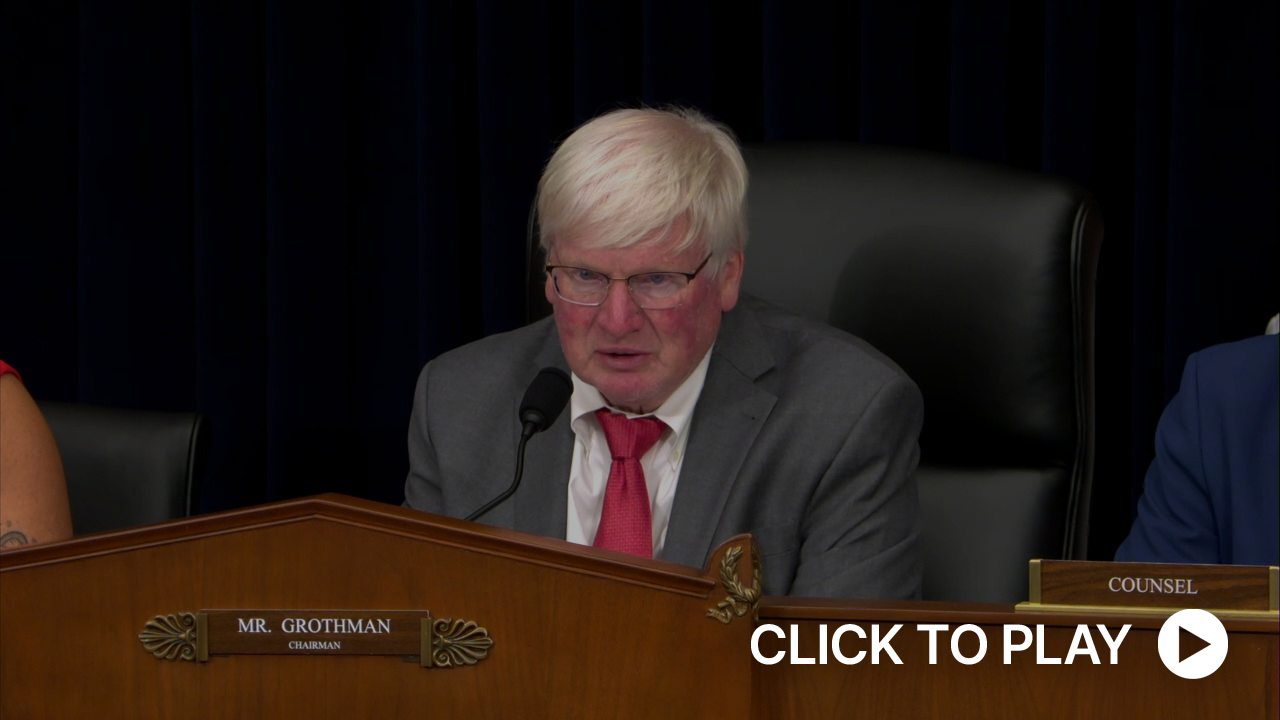
Subcommittee Chairman Grothman: “Medicine has changed, and more cancers [are] being treated with oral medication that patients take at home rather than through IV infusions. For many patients, oral chemo is the safer, easier, and more effective option. But the way these drugs are paid for has not kept pace with the change. I’d like to ask both Mr. Okon and Dr. Kircher, can you explain in plain terms, how our insurance rules have failed to keep up with the science, and who ends up paying the price for this failure?”
Mr. Okon: “Mr. Chairman, part of the problem is, you identified in your remarks that the PBMs. Basically three PBMs control 80 percent of the prescription drug market. You have to realize each one of those PBMs is owned by an insurance company. In fact, in some cases, the insurance company owns the physicians as well too, [such as] with UnitedHealthcare. So, the problem is that as these companies have seen these oral cancer drugs and upwards of 30 percent, going on 40 percent, of cancers are treated with oral cancer drugs. You have to realize that they are gold to these PBMs. They are gold, especially when they can extract rebates and do other mechanisms to make off of these drugs. And they always push the highest, the highest priced drugs. So, the fact of the matter is that that this is attracted them to a market that is just going to increase, and it’s just going to get worse.”
Dr. Kircher: “Yeah, I agree and, you know, I think the cancer in cancer specifically, the drugs have changed so much over the last 20, 30 years. Where we did used to only have IV chemotherapy, and even in the in the 15 years that I’ve been practicing, the science has evolved into a space where not only orals…Now we’re going to have, you know, a lot more immunotherapy, car-T therapy, different types of infusions that will need to keep up with this antiquated way that we really finance the chemotherapy, locking us in to a bucket that really doesn’t make sense for oncology anymore.”
Subcommittee Chairman Grothman: “The medical providers that are members of the Community Oncology Alliance, or COA, treat most of the cancer patients in our country. As COA Executive Director, you’ve spent years fighting the industry practices that get between patients and their prescribers. Could you explain to us how PBMs and insurers often interfere with a patient’s prescribed oral chemo treatment?”
Mr. Okon: “It is terrible. First of all, when the drug is prescribed, if the insurer—the PBM with prior authorization—does not agree with that, then the oncologist basically has to make a switch, or in some cases, the insurer will basically say, ‘you have to fail first on this drug,’ and in some cases, ‘a couple times you have to fail.’ Think about it about cancer patient. And someone says, ‘you have to fail on that drug,’ meaning your cancer is growing before you basically get the drug that they want. And again, I go back to the issue here, when you have three entities that control 80 percent of the prescription drug market, they are in a leveraged position to extract rebates, and therefore they look for the most expensive drugs, the drugs that they can profit the most from, as the drugs that they want the patient to get, not what the oncologist wants. So, it is it is a growing problem, especially as we have more oral drugs. Why didn’t we see this ten years ago? Because we didn’t have the oral drugs that we have now. It’s just going to get worse and it’s going to get worse until we do something about these pbs and insurers.”
Subcommittee Chairman Grothman also discussed how federal preemption of state health care regulation creates coverage gaps for oral chemotherapy medications, and how his bill, H.R. 4101, would fix this issue.
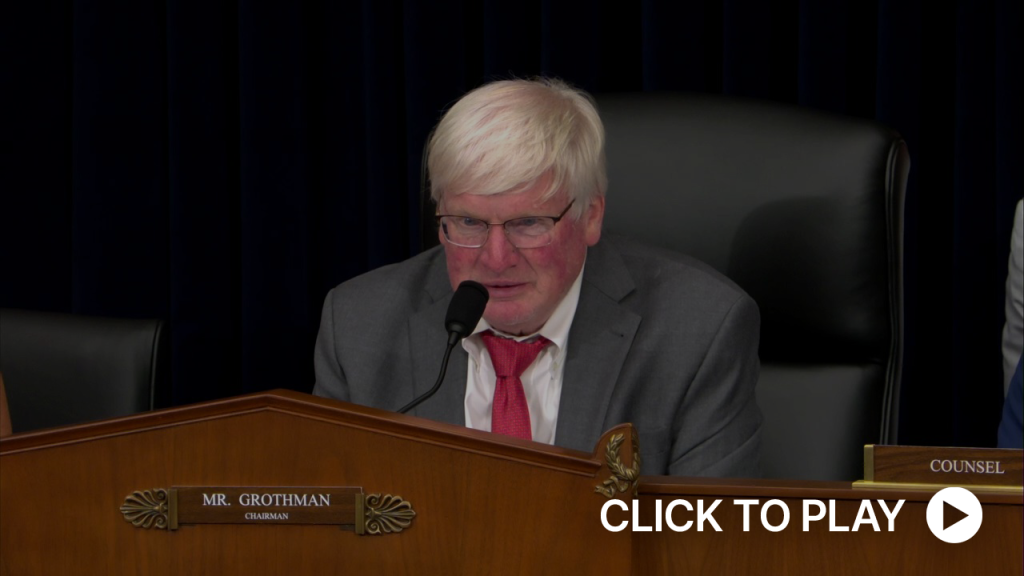
Subcommittee Chairman Grothman: “I know that right now all the more importance for the people who do show up 43 states. Mr. Okon, this is for you. 43 states and the District of Columbia have already passed oral [chemotherapy] parity laws. I believe I voted for such a law when I was in the state legislature in Wisconsin. But those state laws do not reach self-funded employer plans, so those state laws do not reach self-funded employer plans, which cover roughly two-thirds of Americans. So, you know, if you’re sitting back home and you hear this, you thought, ‘Wait, I thought my state took care of it.’ Not if you’re part of a self-funded employer plan, the Cancer Drug Parity Act, which I reintroduced this Congress, closes the employer plan gap by amending the [Employee Retirement Income Security Act] so a plan covering IV anticancer drugs must offer cost sharing for medically necessary oral anti-cancer drugs, on terms no less favorable than the IV alternative. In practical terms, what changes would a patient at the pharmacy counter see if this bill becomes law?”
Mr. Okon: “Well, I think the I think the beauty of it is, Mr. Chairman, is that now, on a federal level, you basically have parity for those self-funded plans. So it takes it and fills in the gap that you have with those 43 states that is just on the state law. So, I think it’s an absolute step in the right direction. I think what we need to build on it, as I said, Dr. Kircher said as well too, is we need to build on it in terms of having no prior authorization and no fail first step therapy as well too. But everything we do, we have to understand everything that Congress does here is a step in the right direction in terms of PBMs and insurers and certainly oral cancer parity.”
Rep. Paul Gosar (R-Ariz.) asked about the proper role of states in advancing medical innovation, including the development and deployment of oral chemotherapy medications.
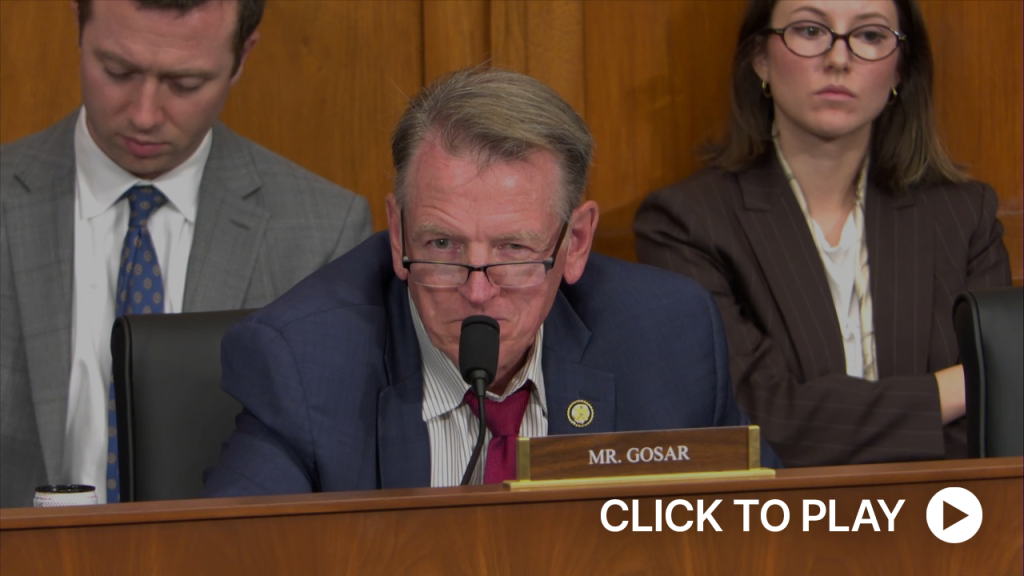
Rep. Gosar: “Mr. Wright, would you agree with the statement I want to make here? ‘Good process builds good policy, builds good politics.’
Mr. Wright: “Generally yes.”
Rep. Gosar: “So we’re talking about process now. I guess what we’ve looked at, we’ve seen Republicans try to do this comprehensive health care. We’ve seen Democrats try to do it, and it’s a failure all the time because I think we lack the aspect of working with our federalist system, the incubators called ‘states.’ Now, I think we really need to do this to find out how it works, how it’s working for them. And, and what first may work in Arizona doesn’t work in Washington State, may work in California; it doesn’t work in New York. We’ve got to tailor it to that to that medicine. And we don’t know those answers until we do that. Would you agree?”
Mr. Wright: “I’ve been a state advocate for 30 years before taking this job. I absolutely agree.”
Rep. Gosar: “Mr. Okon, do you agree with that?”
Mr. Okon: “Yes.”
Rep. Gosar: “How about you, [Dr. Kircher]?”
Dr. Kircher: “Generally, yes.”
Rep. Gosar: “Well, so I I’m looking I’m looking at this and I empathize with you so badly because you’re forced subconsciously to, especially when you belong to a network, you’re subconsciously geared towards what you know, [what] is being paid for and not being paid for, right? Does that make sense to you? So if you see this vertical integration in the docs—you own the pharmacies, they own the hospitals, and you’re forced to do that. So it’s subconsciously puts you in a predicament. ‘Well, I know what they’re going to be paid for so they can get this compensated,’ but may not be the treatment of choice.”
Dr. Kircher: “Correct, yeah. You know, when we are oftentimes playing that calculus in our head as far as ‘I need treatment fast’ and ‘What am I going to be able to get authorized quickly?’ Oftentimes we don’t have that luxury of options, but yes.”
Click here to watch the hearing.