Mace Opens Hearing on Using Technology to Combat Human Trafficking
WASHINGTON—Subcommittee on Cybersecurity, Information Technology, and Government Innovation Chairwoman Nancy Mace (R-S.C.) delivered opening remarks at today’s hearing titled “Using Modern Tools to Counter Human Trafficking.” In her opening statement, Subcommittee Chairwoman Mace highlighted the prevalence of human trafficking and emphasized the significant role phones and websites can play in it. She also urged Congress to address this issue and embrace innovative technologies that can prevent trafficking and help bring justice to victims.
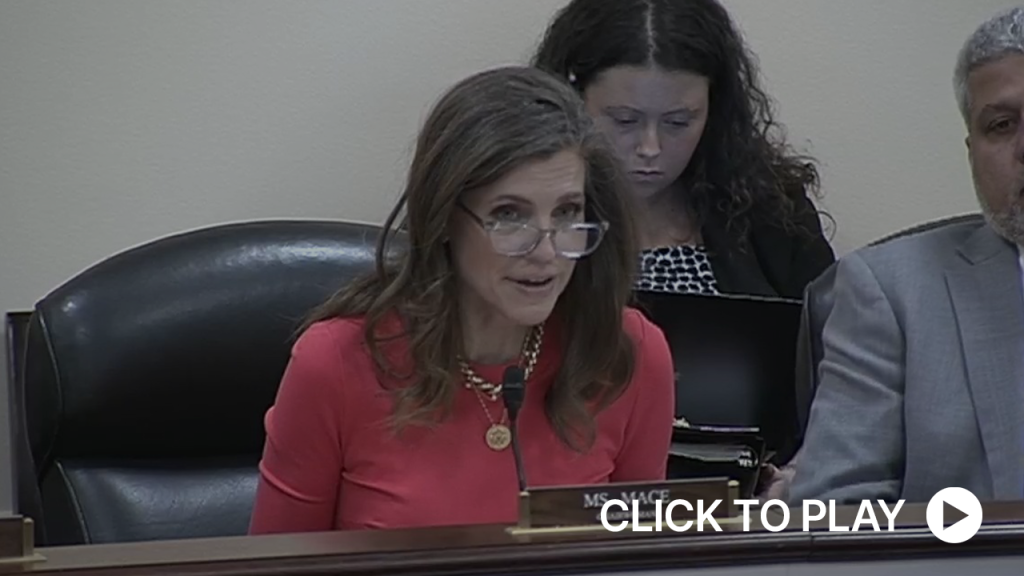
Good afternoon.
Thank you all for being here today for this important hearing on using technology to counter human trafficking.
Human trafficking is not an abstract crime. It is happening right now—on the phones in our teenagers’ pockets, on the websites we scroll past without thinking, and in the hotel rooms just off the interstates which run through all of our districts all across the country.
The average age a victim is first trafficked in the United States could be as low as twelve to fourteen years old.
Let that sink in.
While we’re sitting here, children are being bought and sold online like commodities.
These websites and communications platforms allowed traffickers to operate in unimaginable ways when I was growing up.
But—and this is why we are here today—technology also provides us with a huge opportunity to fight this terrible crime with 21st-century tools.
Artificial intelligence, data analytics, and digital forensics are no longer science fiction. They are recovering victims in hours instead of months, identifying networks once hidden in plain sight, and building courtroom-ready cases against predators who thought the internet made them untouchable.
But here’s the hard truth: we’re still fighting this fight with one hand tied behind our backs.
Law enforcement is drowning in more than twenty million Cyber Tipline reports a year while task forces are understaffed and underfunded and sometimes stuck using tools that were considered cutting-edge twenty years ago.
Tech companies are generating mountains of raw data, requiring increased resources to sort through it all. And well-meaning initiatives with the best intentions have, in some cases, driven trafficking deeper into the dark corners of the Internet, making it harder for our investigators to follow.
According to South Carolina’s corrupt attorney general, Alan Wilson, in the state of South Carolina, a position he has held for sixteen years, human trafficking is up over four hundred percent, and he’s proud of it. It’s obscene. It’s disgusting. And, Alan, if you’re listening or watching this right now, I’ve got it coming for you.
We can do better.
We must do better.
I am hoping to learn from our witnesses today what is working, what is not, and—most importantly—what Congress needs to do next.
Are our current laws helping or hurting?
Do we have the funding, the data-sharing authorities, and the public-private partnerships we need to turn good technology into rescued lives?
And how do we make sure innovation outpaces the criminals who adapt overnight?
Congress has both the responsibility and the ability to remove bureaucratic roadblocks, fund proven solutions, and write smarter laws which actually protect the vulnerable, instead of just making us feel like we did something.
There is no issue more urgent, and there is no excuse for inaction.
I look forward to the testimony of our witnesses and to working with my colleagues on both sides of the aisle to turn today’s conversation into tomorrow’s results.