Burchett Opens Roundtable on Oversight of IRS Operations
WASHINGTON—Subcommittee on Delivering on Government Efficiency Chairman Tim Burchett (R-Tenn.) delivered his opening statement at today’s roundtable on “The IRS Under Audit: A Review of Operations at the Nation’s Tax Collector.” In his remarks, Subcommittee Chairman Burchett noted that the IRS received $80 billion in supplemental funding under President Biden and the Democratic Congressional majority to hire new auditors instead of improving its inefficient taxpayer services and information technology. He also showcased the need for Congress to address this problem and get the IRS on track to become a more efficient agency.
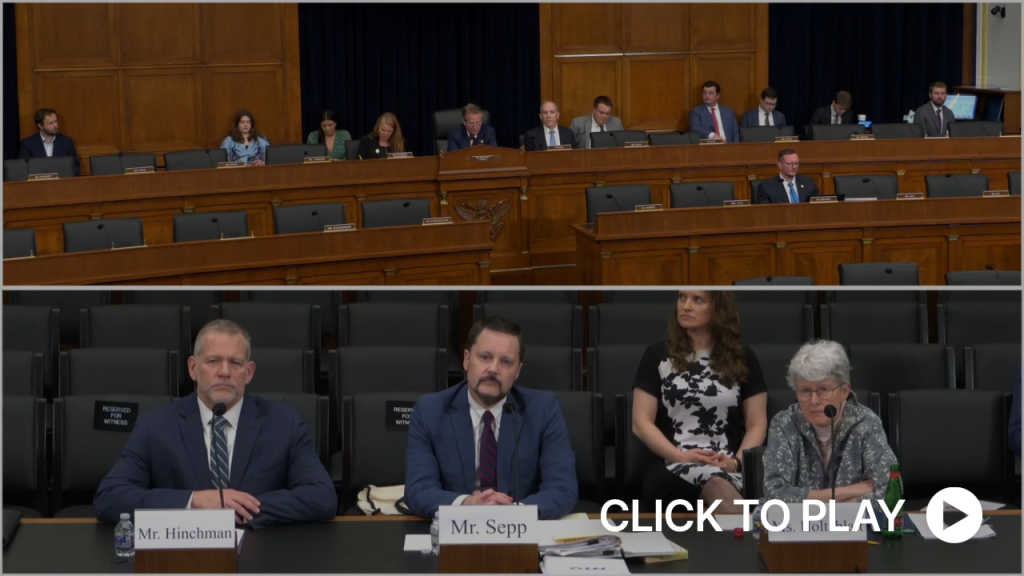
Below are Subcommittee Chairman Burchett’s remarks as prepared for delivery:
Good afternoon, and happy Tax Day.
Today, taxpayers worry if they’ve paid the IRS all the taxes due from them for the past year.
Paying the right amount is no easy task. Tax rates are too high, and the tax code is an endless maze only an accountant could love.
But we’re not here today to talk about what folks owe the IRS.
We’re here today to talk about what the IRS owes them.
What the Nation’s tax collector owes the taxpayers is efficient tax administration. That means making tax filing as painless as possible. It means processing returns and issuing refunds in a timely manner. It means answering the phone when citizens call and answering the mail when they write. It means preventing fraud and safeguarding Americans’ personal data.
Unfortunately, assisting taxpayers was not the priority of President Biden or the most recent Democratic Congressional majority when they showered $80 billion in supplemental funding on the IRS in the Inflation Reduction Act of 2022. They directed most of those funds be used to hire an army of new auditors.
Only about one in ten of the Inflation Reduction Act-dollars were earmarked for taxpayer services or information technology modernization, even though National Taxpayer Advocate Erin Collins wrote at the time that it was, “a no-brainer that the areas that require improvement most urgently are taxpayer service and technology.”
Collins wrote that, instead of hiring more auditors to do back-end audits after taxes are filed, “the most efficient way to improve compliance is by encouraging and helping taxpayers to do the right thing on the front end.”
She was right. We don’t need more tax auditors. That’s why, over the past few years, Congress clawed back from the IRS about two-thirds of that $80 billion in Biden-era funds. In keeping with those rescissions, the Trump Administration used a voluntary resignation program to restore the IRS to pre-2022 staffing levels.
But in the interim, the agency took its eye off the ball. It got distracted by dreams of a vast new army of auditors that would massively raise the federal tax take.
Now, we’re back to reality. And we need to stay there, by keeping the IRS focused on operational improvements that tangibly improve the taxpayer experience.
Those improvements can’t happen without overhauling the ancient information technology systems the IRS relies on for nearly all its core functions, from return processing to customer service.
The agency relies on no data system more than the Individual Master File, which Mr. Sepp, who is with us here today, has called, “the IRS’s most essential tax-processing application, containing data for about a billion taxpayers, both living and dead…its more than 60 years old, and the oldest computer system still in use by the federal government.”
The IRS needs to overhaul the Individual Master File and other dated systems that keep the agency in the Dark Ages. That includes revamping its case management computer systems. IRS customer service representatives rely on these to access tax filers’ history, allowing them to answer questions and resolve complaints.
This Congress and the White House partnered to make real progress on the tax policy side last year, enacting major tax cuts in the Working Families Tax Cut Act.
And the IRS chief recently said the agency has already processed more than 100 million tax returns this year. It’s issued 70 million refunds, and those refunds are on average hundreds of dollars larger than a year ago.
That’s good news. But in terms of efficiency and customer-friendliness, the IRS has a long road to travel.
Today, we’re going to discuss how it can get to the right destination.