Burlison Opens Hearing on Technology Lowering the Cost of Healthcare
WASHINGTON—Subcommittee on Economic Growth, Energy Policy, and Regulatory Affairs Chairman Eric Burlison (R-Mo.) delivered opening remarks at today’s joint subcommittee hearing on “Lowering the Cost of Healthcare: Technology’s Role in Driving Affordability.” In his remarks, Subcommittee Chairman Burlison noted how the Inflation Reduction Act (IRA) and the Biden administration’s regulatory agenda have made health care more unaffordable for Americans and highlighted how different technologies, like 3D printing and telehealth, have already improved the efficiency of healthcare.
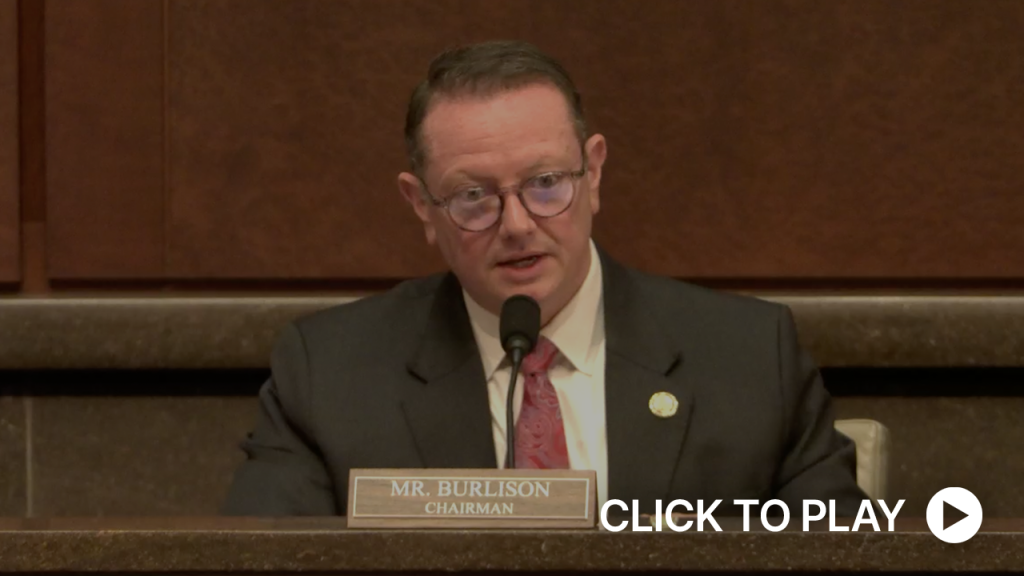
Below are Subcommittee Chairman Burlison’s remarks as prepared for delivery.
Welcome to this joint hearing of the Subcommittee on Economic Growth, Energy Policy, and Regulatory Affairs, and the Subcommittee on Health Care and Financial Services.
Today we are here to explore how innovative technology in the health care sector can help lower Americans’ health care costs.
Health care costs in the United States have long been on the rise, but recent Democrat policies and the radical Biden Administration’s regulatory agenda have made health care costs in America even worse.
The Inflation Reduction Act or IRA, signed into law by the Biden Administration in 2022, was passed under the guise of lowering health care costs for working Americans.
These two subcommittees recently held a joint hearing on the ballooning costs and market-distorting policies included in the IRA.
Today, we have another opportunity to take a hard look at the consequences of policies that not only fail to accomplish their intended goals but place an undue regulatory burden on Americans.
Business owners in our country put their livelihoods on the line to develop breakthrough technologies to reinvent the healthcare industry, but are forced constantly to navigate the regulatory obstacles put in place by Democrat administrations.
The money spent on legal fees and administrative procedures could be reinvested to further improve technologies that doctors and other medical providers can use to improve patient experiences, save lives, and bring families together.
Congress must give private sector innovators the space and resources they need to develop these technologies.
We have already begun to see the tremendous capabilities of artificial intelligence to help lower costs in our everyday lives.
If that power were harnessed in the health care sector, resources could be more effectively deployed to help patients get better.
In addition, lower costs would save the federal government and taxpayers a lot of money in federal health care programs.
For example, patients can use wearable technology to monitor their health.
These devices assist doctors and researchers with realistic data on their patient’s day to day in real-time.
3D printing can create personalized medical devices for individual patients.
Investment in this printing technology has led to the development of customized prosthetics, implants, and surgical tools.
Telehealth improves the efficiency of health care by allowing medical providers to serve patients on a live virtual call.
Telehealth saves time and helps patients connect to their doctors, especially in rural areas with few medical facilities.
These kinds of technologies are revolutionary, but if innovators cannot afford to develop more of them because of expensive barriers put in place by the Biden Administration and the Inflation Reduction Act, the American people will miss out on cutting-edge medical care that could improve patient outcomes.
Earlier this year, President Trump signed the One Big, Beautiful Bill into law. That bill gives over $50 billion to rural hospitals to ensure their continued operation and development of medical technology.
Since entering office, President Trump has taken decisive action aimed at reversing innovation-stifling, Biden-era policies in artificial intelligence, promoting transparent drug pricing, and eliminating the “Biden Pill Penalty.”
Our expert panel of witnesses, including a fellow Missourian and medical technology business owner, will provide testimony on this important issue.
I thank all the witnesses for being here today, and I look forward to our discussion.