Burlison Opens Roundtable on Success of Working Families Tax Cuts Act
WASHINGTON—Subcommittee on Economic Growth, Energy Policy, and Regulatory Affairs Chairman Eric Burlison (R-Mo.) delivered his opening statement at today’s joint subcommittee roundtable titled “The Working Families Tax Cuts Act in Practice: Rewarding Work, Not Washington.” In his remarks, Subcommittee Chairman Burlison explained that the Working Families Tax Cuts Act (WFTCA) has been saving Americans thousands of dollars of their hard-earned paychecks through no taxes on tips provisions and newborn savings accounts. He also noted that the WFTCA has saved millions of manufacturing jobs.
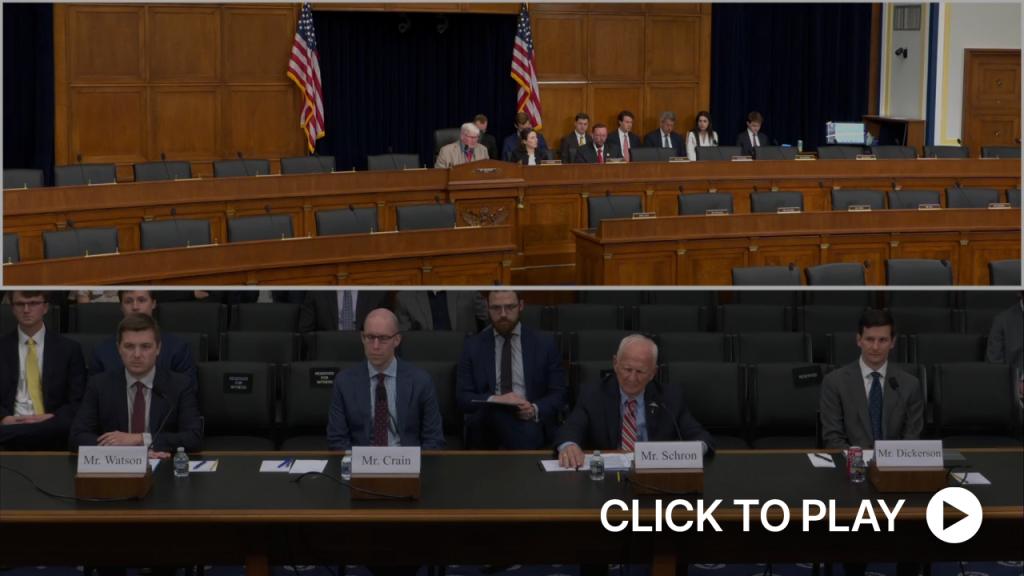
Below are Subcommittee Chairman Burlison’s opening remarks as prepared for delivery:
Thank you all for joining us today.
We’re here to discuss the real-world impact of the Working Families Tax Cuts Act and what it means for the Americans we represent.
Before we discuss policy, it’s important to acknowledge reality.
Many Americans are still struggling. Families continue to feel the effects of years of inflation, rising housing and health insurance costs, and an economy that has become increasingly difficult to afford.
Too many hardworking Americans still feel like they’re falling behind.
That frustration is real.
For years, Washington’s answer to every problem seemed to be more spending, more borrowing, and more government.
Meanwhile, the national debt continued to grow, inflation crunched budgets, and taxpayers were left wondering when anyone in Washington would start exercising the same discipline expected of every household in America.
That’s why the Working Families Tax Cuts Act matters
President Trump made a promise to extend the tax relief that helped fuel economic growth and raise wages for American workers, and he delivered.
Working alongside a Republican Congress, the President signed into law one of the most significant conservative policy victories in years.
We often hear about what government spends. Today we’re here to talk about what Americans get to keep.
The law permanently extends the 2017 tax cuts, preventing what would otherwise be an average 22 percent tax increase, the largest in American history, on families.
The Internal Revenue Service reported in March a 13.6% increase from last year in total tax refunds.
That is $26.5 billion which went back to the American people as they strive to emerge from the affordability pressures launched by the Biden Administration.
The law rewards work. It provides meaningful tax relief for tipped workers, overtime workers, and many seniors, allowing Americans who work hard, pick up extra shifts, or have spent a lifetime paying into the system to keep more of their own money.
Workers can deduct up to $25,000 in tip income and up to $12,500 in overtime pay from their federal taxes.
The law also strengthens the Child Tax Credit for roughly 40 million families, expands educational opportunities for parents, and creates new ways for families to save and invest in their children’s future.
More than four million children are already enrolled in these new savings accounts.
The law also strengthens incentives for investment, research, and domestic manufacturing. It permanently restores immediate expensing for research and development and provides greater certainty for businesses looking to invest, hire, and build in the United States.
Manufacturers warned that failure to act could jeopardize hundreds of billions of dollars in economic output and millions of American jobs. Instead, this law is projected to support approximately $284 billion in manufacturing growth while helping secure millions of jobs across the country.
But just as importantly, this law begins addressing a problem Washington has ignored for far too long: spending.
For decades, Congress has spent money it doesn’t have while taxpayers have been forced to absorb the consequences.
The Working Families Tax Cuts Act begins to change that trajectory.
The law achieves roughly $1.4 trillion in mandatory spending reductions over the next decade and includes reforms designed to encourage work, increase accountability, and begin addressing programs that have become vulnerable to waste, fraud, and abuse.
Is that enough to solve our fiscal challenges? No.
But it is a start.
The American people understand something Washington often forgets: prosperity is created by workers, families, entrepreneurs, and businesses, not by government spending.
No single piece of legislation can solve every challenge facing this country. But the Working Families Tax Cuts Act represents a significant step toward lower taxes, greater economic freedom, stronger growth, and a more responsible federal government.
Today we’ll hear directly from witnesses about how these policies are affecting workers, families, and employers across the country and whether they are delivering on the promises made to the American people.
I look forward to the discussion.