Hearing Wrap Up: DOW Must Make Operational Changes to Pass a Financial Audit
WASHINGTON—Yesterday, the Subcommittee on Government Operations held a hearing on “DOW Financial Management: Examining Progress and New Audit Approaches.” This hearing was part of the Subcommittee’s larger investigation into the Department of War’s (DOW) ineffective financial management that has been preventing them from achieving a clean audit. During the hearing, members analyzed the DOW’s revised audit strategy and assessed persistent roadblocks within the agency that prevent it from passing a financial audit.
Key Takeaways:
DOW has failed eight financial audits and has not achieved a clean audit since being required to in 1990.
- Asif Khan, Director, Financial Management and Assurance at the U.S. Government Accountability Office, stated that “[Department of War] is the only major federal agency that has never been able to receive a clean audit opinion on its financial statements. A clean audit opinion is when auditors find that the statements are presented fairly and consistent with accounting principles. Over the next couple of years, [DOW] plans to take a top-down approach focused on validating accounting balances.”
DOW’s weaknesses and inability to fully account for its assets continues to undermine operational readiness and overall mission preparedness.
- Brett Mansfield, Deputy Inspector General for Audits at Department of War Office of Inspector General, testified that “In December of 2025, the Office of Inspector General issued a disclaimer of opinion on the department’s fiscal year 25 agency-wide financial statements. As in prior years, we issued a disclaimer because the department could not provide sufficient reliable evidence to show its statements were fairly presented… the department continues to face three major obstacles management, responsibility for, and accountability of more than $4.7 trillion in assets. Information technology weaknesses, including hundreds of aging and non-compliant systems in accounting weaknesses such as unsupported adjustments of over $850 billion in the last two quarters of fiscal year 25.”
- Director Kahn stated that “We don’t have enough information about the department’s new approach to say if the department will be able to achieve a clean opinion by the end of 2028. However, it will require significant efforts and resources. In addition, that opinion will only be a first step, although a very important one. After that time, the department will need to refocus on addressing material weaknesses that can sustain this opinion and continue to improve its financial management and operations. We also haven’t assessed [DOW’s] new approach to determine if it’s more or less likely to be successful than its prior approach. But given [DOW’s] slow pace in addressing its key material weaknesses, I can say that the prior approach did not seem likely to meet the 2028 goal.”
DOW introduced a revised and expansive audit strategy that prioritizes resolving balance-sheet issues, identifying areas in need of improvement, and promoting transparency.
- Thomas Harker, Deputy Chief Financial Officer at the U.S. Department of War, testified that “In addition to stand up of [Joint Task Force] audit, we are partnering with the [Office of Inspector General] as they hire an independent public accounting firm to perform the consolidated audit. We are also ending the inefficient process of dozens of disjointed standalone audits and focusing our remediation efforts on getting a clean opinion on the agency wide financial statements, just like every other CFO Act agency. We’re using a hybrid strategy where we rely on internal controls where they exist, maximize the use of artificial intelligence and automation wherever we can, and have the auditors perform substantive testing where they must.”
- Ryan A. Busby, Deputy Assistant Secretary of the Army for Financial Operations at the U.S. Army, stated that “Through this integrated approach, Army will help drive measurable progress and help sustain or help achieve and sustain a clean, audit-wide opinion. To support the department-wide audit, Army has identified the highest risk process areas, imbalances, material to the consolidated financial statements, and developed remediation plans focused on improving the financial accuracy and internal controls for these areas. The Army utilizes both internal testing and independent validation to assess the accuracy and completeness of financial information and identify areas requiring additional information to strengthen accountability. Army leadership identified metrics and governance processes to track progress across major remediation areas. The outcomes of these metrics and governance processes will be shared regularly with the Office of the Secretary of War, comptroller and the JTF audit to support enterprise-wide oversight and consistency and audit remediation efforts. These actions improve visibility into the enterprise risk and ensure that army is held accountable to achieving the department’s goals.”
Member Highlights:
Subcommittee on Government Operations Chairman Pete Sessions (R-Texas) inquired about whether the House Oversight Committee’s efforts to push for a clean audit have been helpful to DOW.
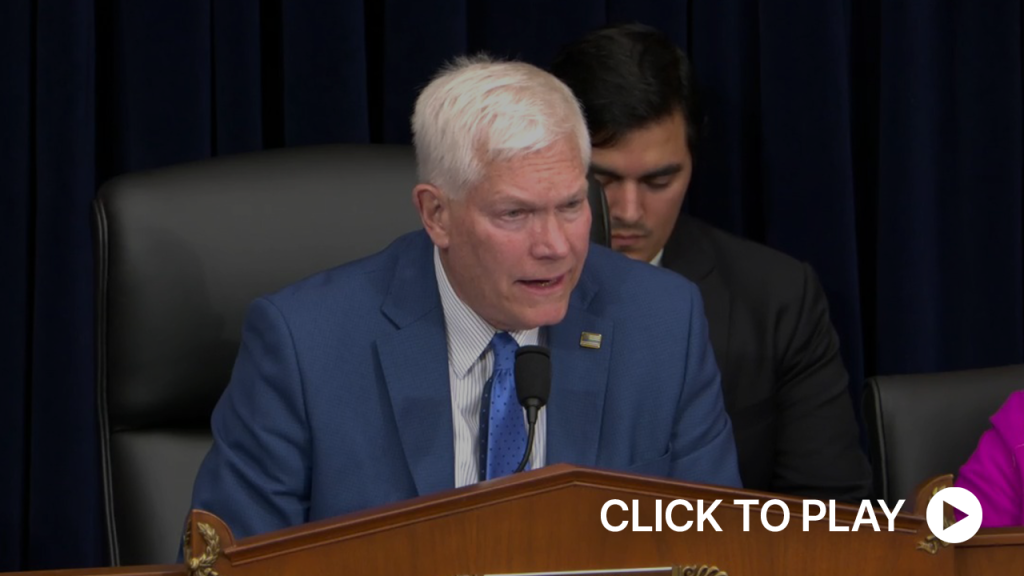
Subcommittee Chairman Sessions: “Do you think that we have asked you to do anything where we are getting in the way of mission critical objectives, by you moving forward to this date of a clean audit?”
Mr. Harker: “Yes, sir. Absolutely. I’ve seen it happen at the Navy when I was CFO.”
Rep. Sessions: “The question is, do you think we are getting in your way or being a hindrance in you performing the duties of providing the necessary information to [Secretary Pete Hegseth], to the joint chiefs? Are we doing anything by pushing ‘clean audit, clean audit, clean audit,’ which you’ve heard here today?”
Mr. Harker: “Yes. No, I do not believe you are getting in our way. You are holding us accountable for compliance with the law and compliance with standards. An audit determines ‘is management doing their job?’ And for many years we’ve been making improvements in that, but we are not there yet. We need to do better. We will do better. We’ll have the opinion by 2028. And that will enable us to provide better information to commanders. As we’ve been going through this progress. The push that you’ve been giving us, the emphasis has helped us to help to hold us accountable, to improve our data quality. We’ve seen data quality improvements on the logistics side. We’ve seen data quality improvements on the accountability for munitions side, the guidance, the feedback we’ve gotten from the [Oversight Committee] has been outstanding in helping us move forward in making those significant improvements that impact operations.”
Rep. Gary Palmer (R-Ala.) asked how long DOW has been focused on getting a clean audit and what the root causes are for the department’s inability to pass one.
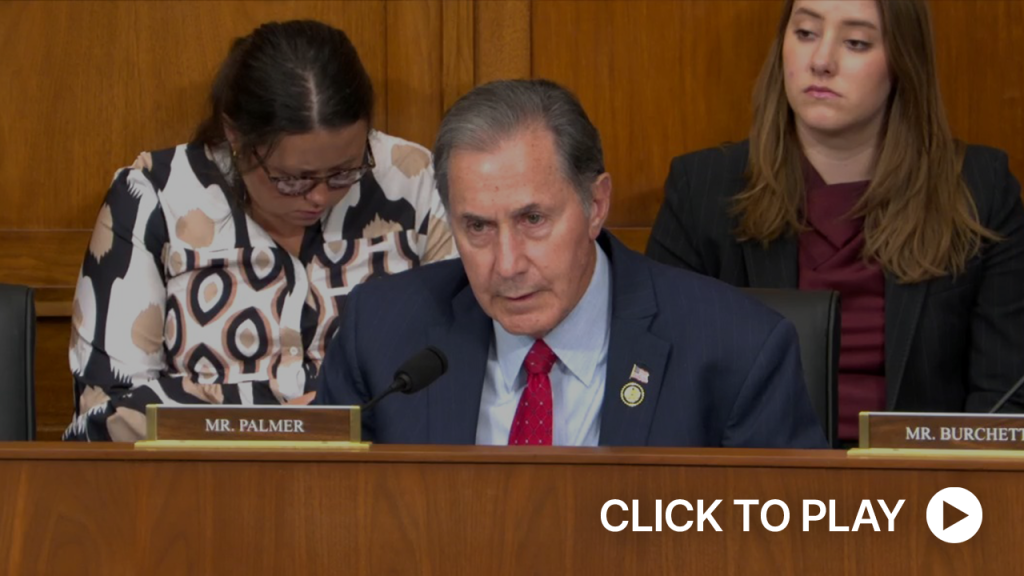
Rep. Palmer: “How long have you been focused on getting a clean audit?”
Mr. Harker: “Pardon me?”
Rep. Palmer: “Sir, how long have you been focused on getting a clean audit?”
Mr. Harker: “A lot of the groundwork has been laid over the last ten, 15, 20 years.”
Rep. Palmer: “The question is, how many years have you been focused on getting a clean audit?”
Mr. Harker: “The CFO Act of 1990 is the one that required us to.”
Rep. Palmer: “You’ve never had one.”
Mr. Harker: “The entire department has not, no, sir. But we are working towards it.”
Rep. Palmer: “Yeah, but that’s what you’ve been doing for 26 years. 36 years. If it’s 1990, it’s 36 years and you haven’t had one.”
Mr. Harker: “We have increased the number of components that have clean opinions. And we had the Marine Corps get a clean opinion three years ago. The Navy is going to get a clean opinion on their Working Capital Fund this year, and we anticipate getting a clean one on the entire Working Capital Fund in 2027 and the department-wide in 2028.”
Rep. Palmer: “Mr. Khan, the Department of War financial management has remained on the Government Accountability Office high-risk list for 28 years. In your view, what are the root causes and why this has remained a perpetual pain point for the department? And how can Congress step in to help clear those bottlenecks? Because obviously, after 36 years of working toward a clean audit, we still don’t have one from the Department of War, from the Pentagon.”
Mr. Khan: “I think in part one can recognize the size and complexity of the department and along with that, they have large and complex systems as well. Many of them were set up for logistics as opposed to financial management. The department has been remediating them, but somewhat slowly, the new systems that they have implemented are not compliant either. So that is one of the major impediments to reaching auditability and also remaining on the high-risk list.”
Rep. Virginia Foxx (R-N.C.) inquired about DOW’s compliance with the 2025 National Defense Authorization Act (NDAA) that encourages departments to implement artificial intelligence and how that might help DOW achieve a clean audit.
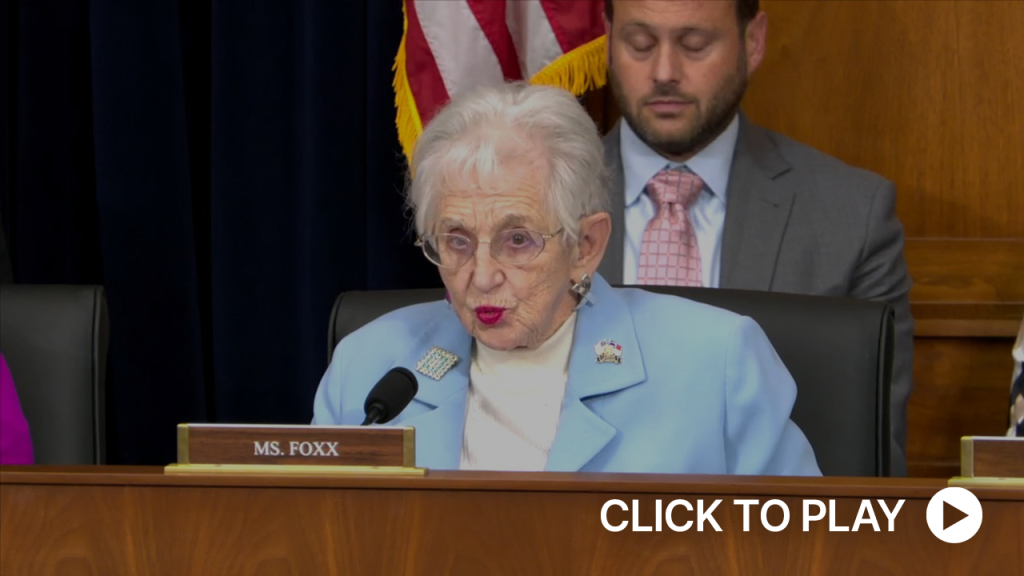
Rep. Foxx: “The fiscal year 2025 NDAA is enacted; [it] contains provisions requiring the secretaries of each of the services to, quote, ‘encourage, to the greatest extent practicable, the use of technology that uses artificial intelligence or machine learning for the purpose of facilitating audits of the financial statements of the department of defense.’ End quote. To what extent?”
Mr. Harker: “We have currently received $350 million in the reconciliation bill. For that, we’ve obligated 48 percent of it. We plan on obligating the remaining funds this year for not just defense, but also all of the services under one umbrella, so we can get the best value for those funds.”
Mr. Busby: “So I’d say we’ve pretty robustly incorporated, you know, technology and AI into enhancing and accelerating the audit. You know, we have tools that do data anomaly detection so that it’ll help us prioritize what items we need to look at. And we built a number of fraud detection tools that are monitoring certain classes of payments throughout their process to see what’s at risk.”
Mr. Mansfield: “I would say that similar to the Army, the Navy and the Air Force have taken similar steps to implement large language models in AI for processes to link together transactions with source documentation, which enables the auditors, which is the role that we play as the OIG, to target our oversight efforts on those areas where there are mismatches to make sure we’re getting to the best use of our resources.”
Mr. Khan: “We are aware of the department using artificial intelligence and newer technology, but we have not evaluated that.”
Rep. Brandon Gill (R-Texas) inquired about what Congress can do to alleviate DOW’s challenges passing an audit and what can be done to expedite the process.
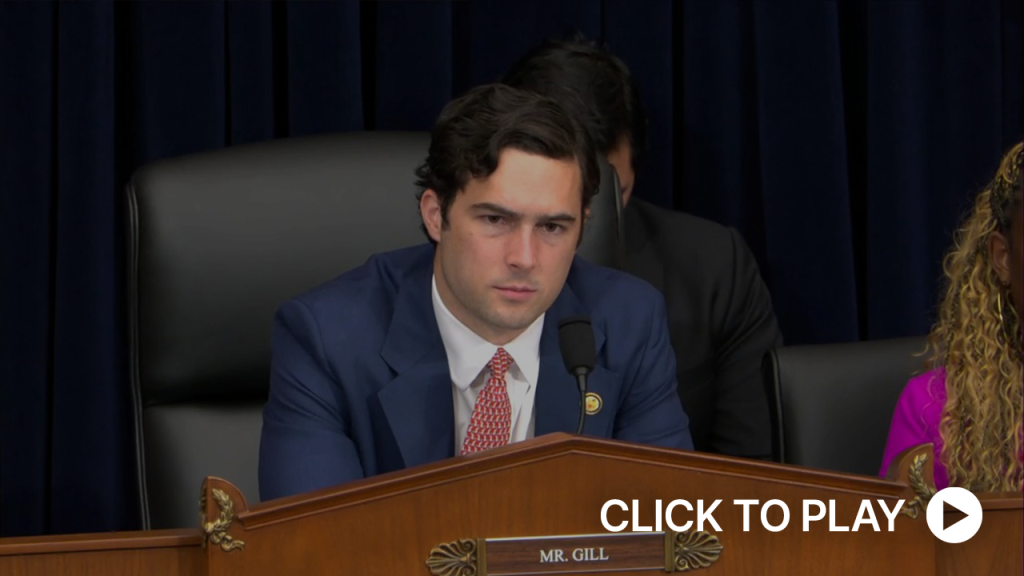
Rep. Gill: “[What] do you think Congress could do to help alleviate some of those challenges?”
Mr. Khan: “I think the most meaningful way is to continue to have these Oversight hearings so that you can. It sends a message that you all are interested in the results of the financial statement audits. It’s very important for the defense of this country. So I think that sends a very strong message to the people in the [DOW] to make sure that they are taking this seriously, which they are. And they have progressed a lot over the prior several years. And if you continue to have these Oversight hearings, they’ll continue to show positive results.”
Rep. Gill: “Is there anything we could do outside of showing interest that that might expedite this process to the point where we can pass an audit in the near future, in your opinion?”
Mr. Khan: “I mean, you can pass legislation to encourage them to go in that direction. And Congress has done that before. So that’s another avenue for the Committee to follow.”
Rep. Brian Jack (R-Ga.) asked why the Marine Corps is the only branch of the DOW that has passed an audit and what other agencies can learn from their success?
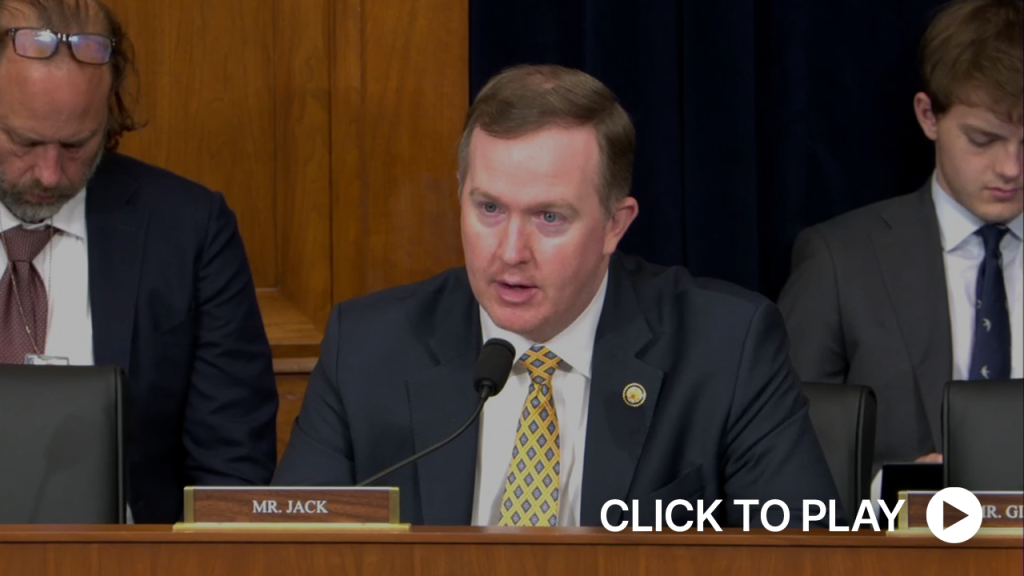
Rep. Jack: “Correct me if I’m wrong, the Marine Corps was the first and only service to achieve a clean, unmodified audit opinion. Is that correct?”
Mr. Harker: “Yes, sir. That’s correct. They’ve had three in a row.”
Rep. Jack: “And could you, given that success, walk us through why the Marines are so well positioned with respect to that initiative and what lessons we can learn, and perhaps other branches can learn from their success?”
Mr. Harker: “Sir, the key factor for the Marine Corps was the Commandant of the Marine Corps issued a two-page letter directing all the Marines to do what it took to get a clean opinion. Once that was issued, it went from where I was working with the Marines and they were saying, ‘yes, this is this is nice, but it’s not important to the Commandant.’ Now the Commandant says, ‘do this.’ I was CFO of the Navy at the time, the Department of the Navy and Marine Corps, and it was amazing how quickly they got in line. They put in the effort to go out, count things, provide the right accounting for them, modernize systems where they could, do substantive test work where they couldn’t. That model has been moved to where now the Navy is doing that. Their Vice Chief of Naval Operations issued similar guidance to the Navy. They’re moving forward. They’re going to get a clean opinion on their Working Capital Fund audit this year. And you see the same thing happening in the Air Force, where they’re both hoping to get clean opinions in 2027. So there’s been a lot of progress inside the department based on the lessons learned by the United States Marine Corps.”
Click here to watch the hearing.