Hearing Wrap Up: USPS Must Increase Revenue and Reduce Costs to Stay Afloat
WASHINGTON—Yesterday, the Subcommittee on Government Operations held a hearing on “Oversight of the U.S. Postal Service: The Financial Future Under Postmaster General Steiner.” During the hearing, members examined the U.S. Postal Service’s (USPS) troubled financial situation after it lost billions of dollars. Members also assessed the initiatives Postmaster General David Steiner is taking to reform USPS and whether the agency will be reliable enough for Congress to increase its borrowing authority from the Department of the Treasury.
Key Takeaways:
The Postal Service’s already-troubled financial situation is getting worse. The Subcommittee needs to know how Postmaster General Steiner intends to course correct.
- Postmaster General of the U.S. Postal Service David Steiner testified that “[USPS] got here because of the drastic reduction in the use of the mail, from historic peak volume of 213 billion pieces per year to today at 109 billion pieces per year. [USPS] lost over 104 billion pieces per year in [its] system. For perspective, if all of that lost volume was paid at the current price of a stamp, which is $0.78, that’s about $81 billion of lost revenue. No company could weather that much revenue loss, so it’s not hard to see how we got here.”
- Director of Physical Infrastructure at the U.S. Government Accountability Office David Marroni testified that “There are no easy solutions. However, it is better to make those choices now rather than wait until crisis hits. To be clear, USPS and Congress have taken significant actions. In the past five years, USPS has implemented a wide-ranging ten-year plan with the aim of fixing its finances, and Congress has passed major postal legislation to provide financial relief. However, those actions have not been enough. While USPS has been able to increase its revenue and cut some costs, its overall expenses have grown at a faster rate, while its service performance has declined. This pattern is not sustainable.”
USPS must grow revenue, not the agency itself, to fix its broken finances.
- Postmaster General Steiner testified that “We’re taking steps to fight our way back above water on pricing. We need higher prices on both our package and mail products. At $0.78, the us first class stamp is the lowest in the industrialized world. Compare it to France at almost $3 and England at $2.50, and the longest distance those letters have to travel is about 600 miles smaller than the state of Texas. We deliver from the tip of Puerto Rico to the tip of Alaska for $0.78. That’s a distance of 5000 miles. So we sell the stamp at less than half the cost to travel eight times farther. If we were to change the stamp price to $0.95, which is still less than half of the cost of foreign posts, that would largely solve our controllable loss, and the stamp would still be the lowest in the industrialized world by a lot. And on the cost side, the Postal Service has undertaken a transformation of our network and operating practices to reduce costs.”
If USPS is going to ask to borrow more money, Congress needs confidence it can pay it back.
- Postmaster General Steiner further testified that “[T]here’s one thing we can’t do, and that is the status quo. And we don’t have a lot of time. One easy action increasing our borrowing authority buys us time, time that we can use to best determine what the postal service should do to best serve the American public. We stand ready to continue serving all Americans. We just ask that you take away the anchors and let us operate like a truly independent agency, free from requirements that weigh us down, or that you compensate us for the cost of those anchors. If we can do either of those, I can promise unparalleled service for the next 250 years.”
- Mr. Marroni also testified that “[USPS] should develop long term financial projections that will help communicate its outlook and progress to Congress and identify actions to help put it on a financially viable path. That said, it is highly unlikely that USPS will be able to fix its poor financial condition on its own. Congress will need to act. Indeed, congress may need to provide some short-term financial relief to help USPS avoid running out of cash. At the same time, it’s essential that congress also address the long-term issues with USPS business model. If those underlying issues aren’t addressed now, USPS will likely continue to struggle financially, and its service performance may decline further. Indeed, within five years, USPS will be responsible for an additional $6 billion a year in retiree health care costs, on top of other expenses that are likely to continue to grow. To fix USPS business model for the long term, Congress will need to decide on the level of postal service the nation requires and determine a balanced approach to funding those services.”
The Subcommittee on Government Operations is committed to working in a bipartisan basis on discovering and analyzing solutions that ensure USPS operates efficiently.
- Subcommittee Chairman Pete Sessions (R-Texas) stated in his closing remarks that “I believe us working together can accomplish this. And I’m talking about the Postal Service, I’m talking about some their vendors, and people back and forth. I think the system is better when it works together. I think the system is better when it views each other as complementary to that system. I think that there are people that do certain things out of their own, either best interest or that’s the way their route is, so to speak. There are things that you have as an advantage with the Postal Service that seemingly could be a disadvantage, but that we can turn into an advantage. But I think that when we try and move that needle too far one way or another, I think it works adversely against the best interest of the whole.”
Member Highlights:
House Oversight and Government Reform Chairman James Comer (R-Ky.) asked whether USPS should not spend billions of dollars on programs the private sector offers at a fraction of the cost.
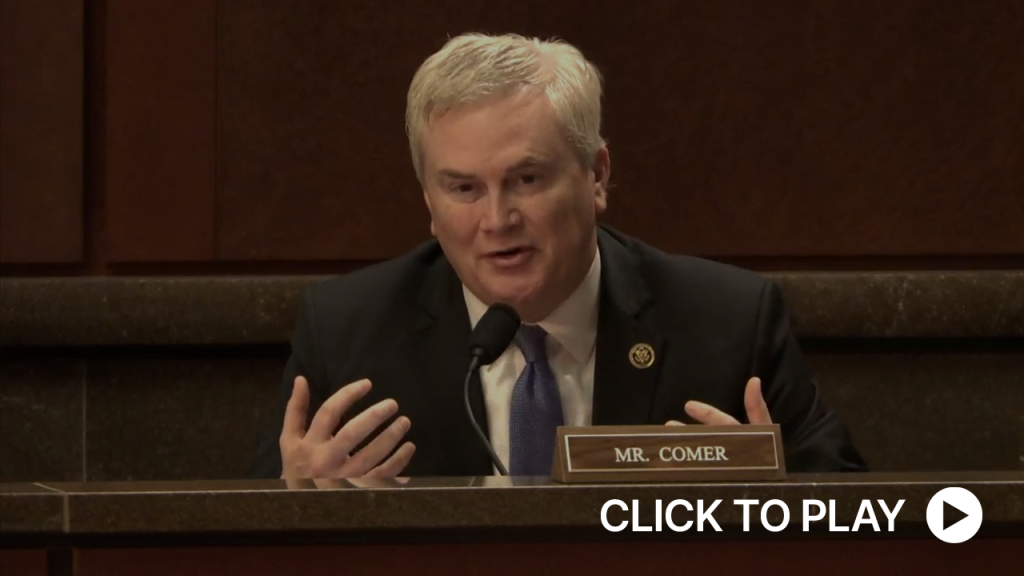
Chairman Comer: “The [Office of the Inspector General] found that the Postal Service has spent over $1.5 billion developing the SHIP program, and it’s something that the private sector already offers. The program wasted billions. The OIG recommended ending it. Your chief financial officer agreed to end it, but it is not ended. First, do you agree that the USPS should not spend billions recreating programs that the private sector already offers at a fraction of the cost?”
Postmaster General Steiner: “Yeah, I mean, that’s a great question. You know, from our perspective, we want to give the customer the best experience. And generally, I would say giving the customer the best experience is dealing directly with our customers, but we have looked at situations where we would have others between us and our customers to do that type of technology work. We’re actually looking at it right now…”
Chairman Comer: “But then I apologize for interrupting my limited time. So will you or will you not commit to ending this program immediately? I mean, that’s part of what we’re all concerned about, at least on this side of the aisle, [are] the losses. We want to protect the Postal Service, but we’ve got to make some business decisions.”
[…]
Chairman Comer: “Based on the numbers, it looks to me like nearly 80 percent of the U.S. Postal Service’s cost are labor, which is the case with just about every government agency. The biggest expense in your entire budget is personnel, and most federal agencies today, have hiring freezes. Why would that not be something you would be looking at to reduce costs instead of asking congress for a bailout?”
Postmaster General Steiner: “Oh, we’re absolutely looking at that. Now remember, there’s two pieces to our to our network. There’s folks that actually deliver the mail. And you know, you don’t want to do a hiring freeze there because if we do that, then we won’t deliver mail. From a management perspective, you know, we have not increased the number of our employees dramatically, but, as you know, increased and every other government agency decreasing the actually, just like most private sector. Actually, in the last four years, we have about 30, 35 thousand fewer employees, and we’re moving toward more of those employees being pre-career rather than career. There’s two ways we can really save money here. That’s changing our mix of career and non-career more toward non-career.”
[…]
Postmaster General Steiner: “We did the only thing that we’ve really insourced in the last year is our local transportation network. And we started to insource that. I will tell you anytime I can do something better, cheaper, we’re going to do it.”
Chairman Comer: “And that’s hard for me to believe you’re doing it cheaper from the Postal Service. You’ve done that, and you’re asking for more money. It’s just hard to believe. Maybe it’s true, but it’s hard for me to believe being in Congress nine-and-a-half years.”
Rep. Virginia Foxx (R-N.C.) asked what evidence is there that USPS reforms are working and if Congress can expect different results if the Delivering For America continues.
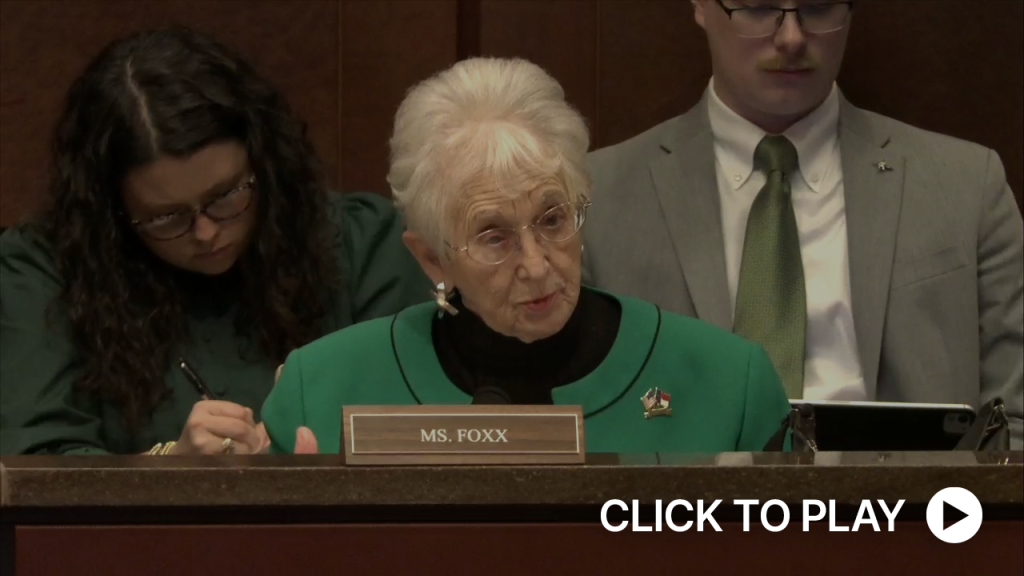
Rep. Foxx: “People in my office know people who’ve sent out wedding invitations, mailed in plenty of time. People haven’t received them a month later. This is unacceptable, Mr. Postmaster General. Absolutely unacceptable. If you want people to continue to use the Post Office, then they have to get the kind of service that they deserve and have had in the past. Now, we were told the Delivering For America (DFA) plan was a long-time strategy to steady Postal Service finances, improve operations and protect the future of the mail system. But the USPS losses continue. Productivity has declined, Americans get repeated rate increases, slower services. I was a big part of the Postal Service Reform Act also in 2022. So given what’s going on, the very negative things that are happening, what evidence suggests the current plan is working? I heard what you just said. And why should Congress expect different results if the DFA plan continues?”
Postmaster General Steiner: “Yeah, I couldn’t agree with you more on the service issue. We absolutely have to do a better job with what we call the tale of the mail, the wedding invitation that shows up late, the Valentine’s Day card that doesn’t get there on time. You know, this is an unbelievably complicated network. Just to give you perspective, FedEx and UPS both deliver well under 10 billion packages a year, well under 10 billion. We deliver 110 billion pieces per year. And so this network is so much more sophisticated than those networks because of mail. And so there are hundreds of pinch points where there can be problems. It goes back to what I said earlier. You can build a network, but you got to learn how to operate the network. And I will tell you, we are not great at operating the network. We’ve put Doug Tulino in charge of that, making sure that all three of our pieces that do delivery are joined together and working together. And you started to see progress. You started to see some very good progress in service. So I’m not going to sit here and tell you that we’re there yet.”
Rep. Foxx: “So can we expect modifications to the plan and better service? Mr. Marroni said that you have controllable costs, but you didn’t give us any specifics. We know that if you could reduce controllable costs by roughly two percent per year, you’d put the Postal Service on a path to break even. Given that possibility, what specific steps is USPS taking to reduce controllable costs?”
Postmaster General Steiner: “Well, we’ve got to look at controllable costs everywhere. So we’ve talked about it in the network. You’ve got fuel costs, of course. You’re going to see those disappear as we’ve seen the price of fuel go up. You’ve got labor costs. You’ve seen our work hours come down by over 50 million work hours. Now we need to make those, make sure that those work hours are straight time hours, not overtime hours. And we need to make sure that our complement moves more toward pre career than career. We still have a lot of room to grow there. So there’s a lot of dollars to be saved right there. And the rest of the money is going to come by us learning how to operate the network better. But let me make it very, very, very, very clear. We are not going to save our way out of the hole that we’re in. There is, you know, I know that that the prior plan said ‘break even’ in 2023…not going to happen, didn’t happen. And I don’t expect to see it happen anytime soon for on the current path that we are on. Why is that? Because inflation, inflation keeps eating up our savings.”
Rep. Gary Palmer (R-Ala.) inquired about USPS’s purchase of costly electric vehicles and what the economic case is for it.
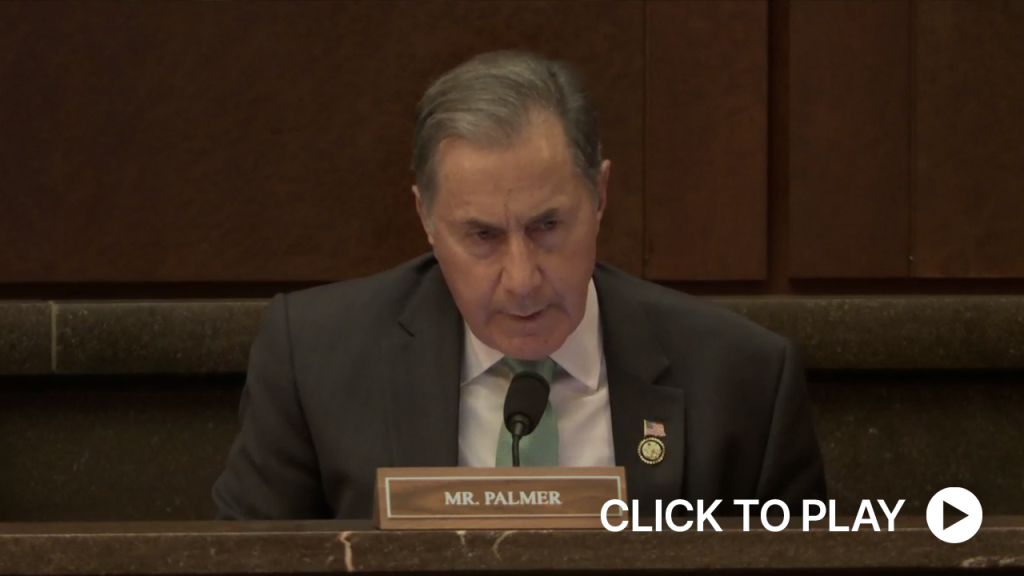
Rep. Palmer: “[They] make a point that if you could reduce controllable costs by just 2 percent annually, you would eliminate your operating losses and reach a break even. And by 2030, that’s basically when this report was done would have been about five years. How do you respond to that?”
Postmaster General Steiner: “I’ll tell you, I’ve been a part of two of the largest logistics companies in the world for the last 20-some-odd years, waste management and FedEx, neither of them have been able to do that. You know, everyone thinks, ‘oh, it’s easy, it’s very easy. Just get productivity.’ The problem is you’ve got expenses rising. You’ve got to give employees pay increases. Fuel goes up—”
Rep. Palmer: “I’m going to interrupt you there because part of your increase in expenses has to do with the mandate to purchase next generation delivery vehicles, which is a euphemism for electric vehicles. And, and the ones that the Post Office is buying from Oshkosh (Wisconsin) were like $20,000 more than your conventional vehicles. The ones you purchased from Ford were $10,000. I know the federal government has allocated $3 billion in the so-called Inflation Reduction Act for this, but your overall cost is going to be close to $10 billion. So how do you, when you’re doing things like this, that I can’t make an economic case for this?”
Postmaster General Steiner: “Well, look, you’re going to hear me say this repeatedly and over and over again. If I’m in the private sector, I’ve got options. If I have 71 percent of my routes that are losing money, guess what I can do? Cut routes. If I have 80 percent of my stores that are losing money, you know what I can do? I can cut routes, I can raise prices, I can do all the things that I can do in the public sector. We don’t have options. We have mandates.”
Rep. Palmer: “Well, here’s, here’s where you could help us out to help you. I’d like for you to provide to the to the Subcommittee, and we’ll provide a breakdown of where your revenues come from.”
Click here to watch the hearing.