Sessions Opens Hearing on Preventing Fraud in State-Run Federal Programs
WASHINGTON—Subcommittee on Government Operations Chairman Pete Sessions (R-Texas) delivered opening remarks at today’s hearing on “Fraud Prevention: Understanding Fraud in Federally Funded Programs Run by the States.” During his opening statement, Subcommittee Chairman Sessions highlighted the Fraud Prevention and Accountability Act that he is introducing today that ensures the Treasury Fiscal Service is able to stop fraudulent payments from ever going out in the first place. He also emphasized that fraud occurs in both blue and red states and that Congress must discover the root causes of fraud in order to prevent it.
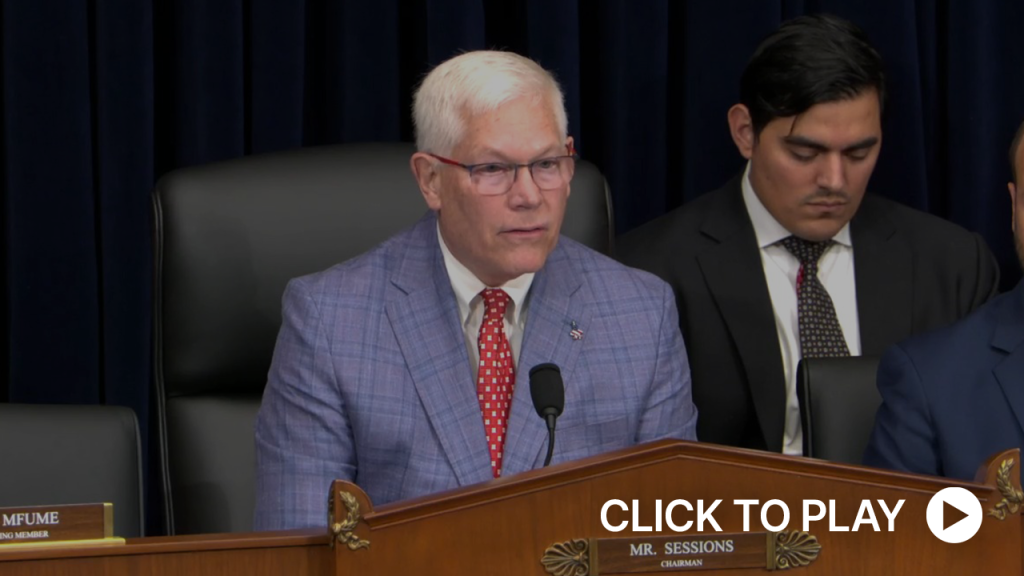
Below is Subcommittee Chairman Sessions’s statement as prepared for delivery:
Good morning, and welcome back to the freshly refurbished main Committee hearing room.
For the past three years, Ranking Member Mfume and I have worked together to understand the basic elements of fraud in federal programs: Why is fraud a problem, how does it happen, and what can be done to fix it?
I am pleased to announce this work provided the foundation for the Fraud Prevention and Accountability Act, which I am introducing today.
For too long, too little emphasis has been placed on preventing fraud.
My legislation changes the paradigm, from pay-and-chase to prevention, by ensuring the Treasury Fiscal Service can stop fraudulent payments from ever going out in the first place.
And just as important, if not more so, it ensures the money intended for those in need goes to those in need.
My bill also creates the Inspector General for Fraud, Accountability and Recovery (IGFAR), which, in essence, creates a permanent home for the anti-fraud analytic and investigative capabilities developed by the Pandemic Response Accountability Committee (PRAC) during COVID.
I am hopeful the provisions of this bill will mark an important step in showing fraud is not just “a cost of doing business” in federal programs.
Regardless, our work is far from over.
Today we will focus on fraud that occurs in federal assistance programs that are administered by states such as Medicaid, SNAP, and unemployment insurance.
I want to make one thing perfectly clear: while we are fresh off the heels of the full Committee’s investigation and hearings into fraud that occurred in certain programs in Minnesota, this hearing isn’t about Minnesota.
There was Minnesota, but there was also Mississippi, in which the state auditor, Mr. Shad White, identified waste and fraud in the state’s Temporary Assistance for Needy Families (TANF) program.
What I am hoping to clearly identify today are the prime factors for why fraud happens at the state level.
Is there enough of an incentive for states to aggressively prevent fraud in federal programs?
Are the underlying statutes too porous and vague?
What challenges, to include prohibitions, exist that prevent access to necessary information?
What changes are needed in the transparency community such as state-level inspectors general, state auditors, state comptrollers to effectively oversee programs?
Today’s witnesses will help us understand the root causes of state-level fraud and lay the groundwork for additional action to ensure taxpayer dollars are used appropriately.