Sessions Opens Hearing on Using ID Verification to Combat Evolving Fraud Landscape
WASHINGTON—Subcommittee on Government Operations Chairman Pete Sessions (R-Texas) delivered opening remarks at today’s hearing titled “Emerging Fraud Threats and the Evolving Fraud Landscape.” In his statement, Subcommittee Chairman Sessions highlighted the many changes made to Login.gov over the years that left vulnerabilities in the system, and how fraudsters can create thousands of synthetic identities to apply for many different government programs simultaneously. He also emphasized that federal government agencies need to be proactive at preventing fraud by identifying the new ways scammers perpetuate it.
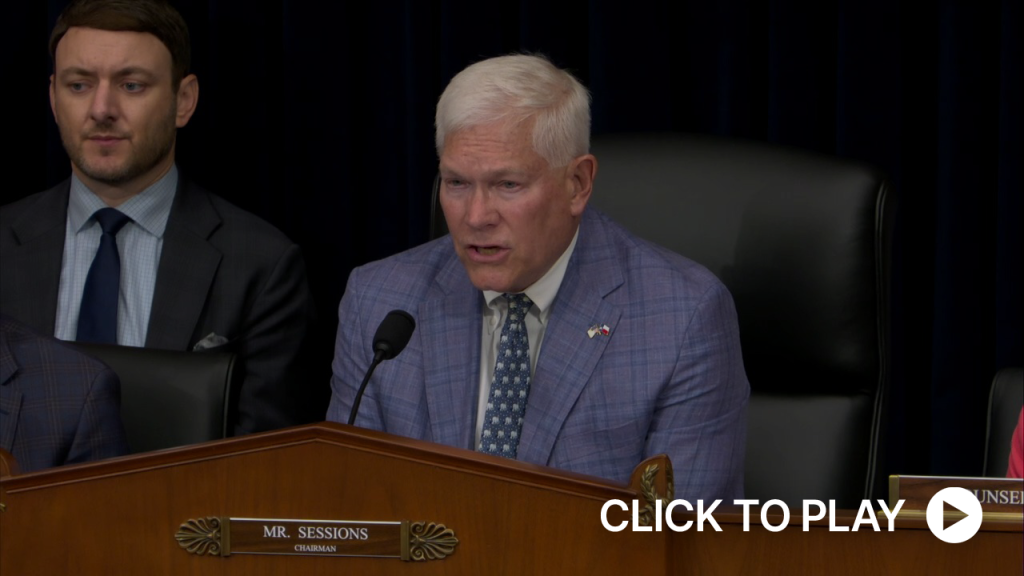
Below are Subcommittee Chairman Sessions’s remarks as prepared for delivery:
Welcome to today’s hearing on emerging threats and the evolving fraud landscape.
Over the years, the Government Operations Subcommittee has held several hearings talking about fraud—both how to identify it and how to prevent it.
In our discussions, we have highlighted the importance of government agencies focusing on prevention before fraud happens.
As we’ve heard countless times before, once money has gone out the door, it’s hard to get that money back.
This remains very important. But one critical element missing from our many conversations is: “What sort of fraud are we trying to prevent?”
In our past discussions, we’ve referenced the fraudsters in a dark room stealing Grandma’s Social Security Number.
We’ve highlighted the risk posed by foreign actors applying to multiple disaster relief programs.
We’ve discussed elaborate fraud rings that exploit loopholes in benefits programs in order to receive payment for services not rendered.
But fraud threats are changing, and they are advancing rapidly.
Identity fraud threats, specifically, are booming as fraudulent actors become smarter and gain access to tools intended to make our lives easier—namely, AI.
This gives them more power.
Government programs rely on identity verification to confirm that the individual applying for benefits and services is who they claim to be.
However, as we’ve seen over the years, the platforms used for this verification have failed to meet expectations.
In March 2023, this Subcommittee held a hearing focused on Login.gov and the troubling findings from the General Services Administration’s Inspector General report released that month.
In short, GSA misled government clients about the extent to which Login.gov met certain technical standards.
These standards were the backbone of what was needed to ensure that the identity verification platform could prevent fraud and protect taxpayer information.
Over the years, many changes have been made to Login.gov, and federal agencies have explored other public and private sector solutions for digital identity verification.
As we are moving to a more digital environment where individuals may no longer be asked to present a physical ID card, we need to better understand what the threats are and what the fraud landscape looks like.
Today’s fraud landscape looks different than the one that existed when we first started this work.
Fraudsters, from anywhere in the world, can now create hundreds or thousands of synthetic identities and apply for many different government benefits programs simultaneously.
Bad actors are able to use deep fakes, mimicking the likeness of an individual, to circumvent the safeguards we put in place.
Bad actors have made it their business to exploit vulnerabilities in our government programs. It is necessary to understand how they have been successful so we can adjust our tools to combat them.
As the work of the Subcommittee has shown, agencies need to be proactive and take actions to prevent fraud, but they also need to be proactive about monitoring fraud as it occurs.
Identity verification has long been a one-time check at the beginning of an application process but—considering the rapid evolution of identity fraud—we should start thinking about validating and verifying identity continuously.
Fraud should not be considered the cost of doing business because it means that someone is not getting the benefit that they are eligible for.
In January of this year, I introduced bipartisan legislation to combat identity fraud and theft.
The Stop Identity Fraud and Identity Theft Act aims to strengthen the nation’s digital identity verification infrastructure and protect individuals, businesses and government programs from rapidly rising identity fraud and theft.
I’m hopeful that this legislation is a step in the right direction and look forward to the discussion today informing how we can strengthen it.
We have a great panel of witnesses who can shed light on new identity fraud threats plaguing our systems, how the fraud landscape is evolving, and what the government must do to keep up.
I look forward to a fruitful discussion on this topic and thank Ranking Member Mfume for his continued leadership in this area.