Wrap Up: Burdensome Regulations Harm Farmers and Ranchers
WASHINGTON—Today, the House Committee on Oversight and Government Reform held a roundtable on “Farming on Trial: A Roundtable on the Growing Use of Lawfare Against American Agriculture.” During the roundtable, members heard directly from participants who have confronted agricultural lawfare and examined how courts and litigation are shaping farm policy and creating steep burdens for American farmers and ranchers. Members also analyzed the ways federal overreach, overbearing regulations that lower affordability, and increasing compliance costs have made farming more difficult, and committed to exploring the ways Congress can alleviate these burdens.
Key Takeaways:
Courts and litigation are increasingly shaping farm and private property policies, with lawsuits and settlements driving regulatory outcomes rather than transparent, accountable lawmaking.
- Marty Jackley, Attorney General of South Dakota, explained that “One of the biggest concerns I have is a lawyer is the arguments that the United States made and [the] complete disregard for its trust responsibility. And ranchers indicated that trust lands, that involve ranchers and native Americans, they have no property interest, which is contrary to the law and contrary to the history and equally so on range units. And what a range unit is, is simply when you combine parcels of land to ultimately have a unit that it’s set up by the [Bureau of Indian Affairs], they charge a fee for a five-year lease on that. They ultimately determined and believed the United States that that also is not a property interest. And so, they put these ranchers basically in jeopardy of their farming operations by bad decisions. They did nothing to correct those decisions. They’ve used the civil courts to drag out litigation and ultimately disregarded long-established history of private property rights and tribal trust responsibilities.”
- Shad Sullivan, Private Property Rights Committee Chair of R-CALF USA, informed Members that “There is a growing wave of eminent domain tied to energy infrastructure, turning private land into target for large scale wind, solar and transmission products, including Xcel’s Power Pathway corridors. In Colorado, my own family was forced to settle with Xcel for pennies on the dollar just to avoid crushing legal costs. Many states are facing similar pressure, including Maryland’s Gabe Amo family farm. Just in the past year, I have witnessed the lawfare double down of governmental agency, holdovers, environmental organizations, global corporations, and political adversaries from both sides.”
Progressive, left-wing organizations and administrations have been weaponizing burdensome regulations and high compliance costs against American farmers and harming their livelihoods and threaten America’s food supply.
- Mr. Sullivan also explained that “It is the EPA division, the Department of Natural Resources, the Pollution Controls Hearing Board, and the Department of Ecology. Environmental organizations have become highly effective in driving these federal and state land grabs. The nature conservancy has been at the forefront of these efforts, while the World Wildlife Fund, which has claimed that cattle are killing the planet, have also partnered with agricultural trade associations to influence policy. Many, many NGOs received millions and millions in federal funding each year and use tactics like ‘sue and settle’ to shape outcomes. Overlapping leadership between these organizations, government agencies, and universities creates a closed loop of influence that drives policy, messaging, and enforcement.”
- Margaret Byfield, Executive Director of American Stewards of Liberty, explained that “We purchased a ranch in central Nevada in 1978, and it’s a combination of private land and grazing allotments on that land. We owned all the water rights. The ranch was 1,100 square miles. When we purchased the ranch, it was very clear from the previous owners this is why they were getting out—that the government wanted that property. So the very first thing that happened to us is the [U.S. Forest Service] filed a claim over every one of our water rights and then used the grazing regulations to force us off the land in our very first grazing season there. In 105-day period, we received 40 certified letters and 70 personal visits from the forest service, informing us of violations to our grazing permits.”
Congress must commit to reforming manipulative agriculture policies to ensure that farmers’ private property is protected and that family-owned farms can continue to successfully operate and contribute to the nation’s food supply.
Member Highlights:
Chairman James Comer (R-Ky.) asked about actions that can be taken to counter the excessive use against eminent domain against farmers.
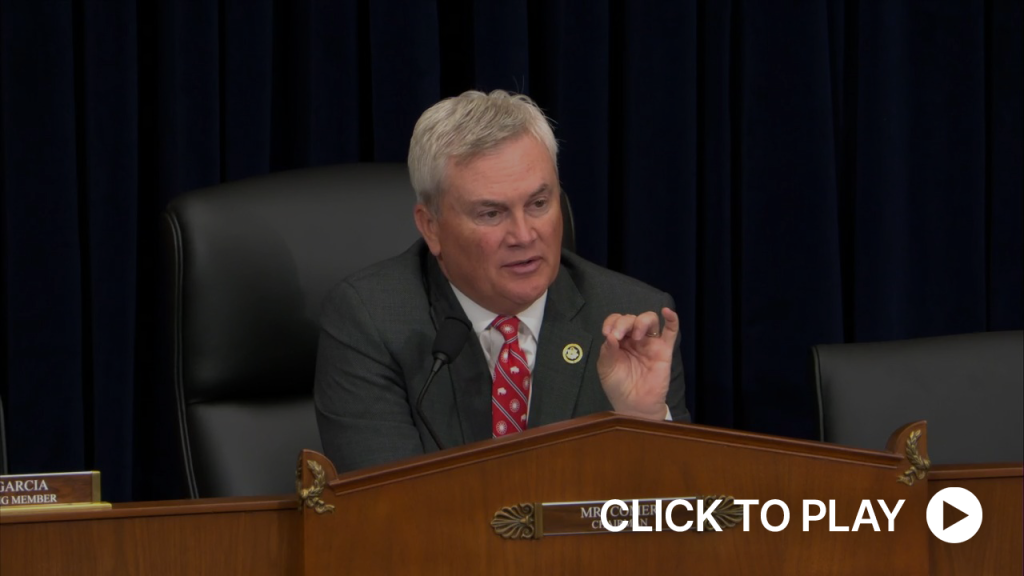
Chairman Comer: “General Jackley, as the Attorney General for the State of South Dakota, can you talk about how eminent domain, which is a huge issue in Congress, how eminent domain poses a substantial risk to the agricultural community, and what can be done to counter the excessive use of it? And I want to be clear, there are entities when I believe—even as a big landowner, I’ve probably 1,500 acres of farmland—there are instances where even if I don’t like it. We have to use eminent domain, but it’s being abused. It’s being used excessively in my opinion. What can be done to counter the excessive use of it?”
Attorney General Jackley: “You know, one of the things—and that’s a great question, Mr. Chairman—and my state went through that as it pertained to a carbon pipeline. And at the end of the day, the legislature passed certain legislation, but the people of South Dakota spoke. They wanted to make sure there were certain protections in place against the abuse of eminent domain. And I think when you look at that, you have to consider there are instances when there has to be eminent domain for the public good, but there needs to be protections for its abuses. And those protections can exist by defining, you know, certain uses by looking at the economic side of it. They can be affected by, again, as I mentioned, the right to a jury trial versus a judge trial. So there are protections that could be put in place. And South Dakota has been engaged in that conversation. And I think the people of South Dakota have given pretty good direction on that, and we’ve improved our laws. They’re not perfect, but they’ve improved. And I feel strongly that there needs to be those protections in place because some of the abuses that were occurring, and not every landowner can afford to hire a lawyer to hire an expert, whether it be a surveyor or an appraiser, and I think those protections were necessary.”
Rep. G.T. Thompson (R-Pa.), Chairman of the House Agriculture Committee, inquired about how Congress can be a better ally to farmers and producers across the country and how the lack of clarity surrounding water rights has impacted agriculture litigation.
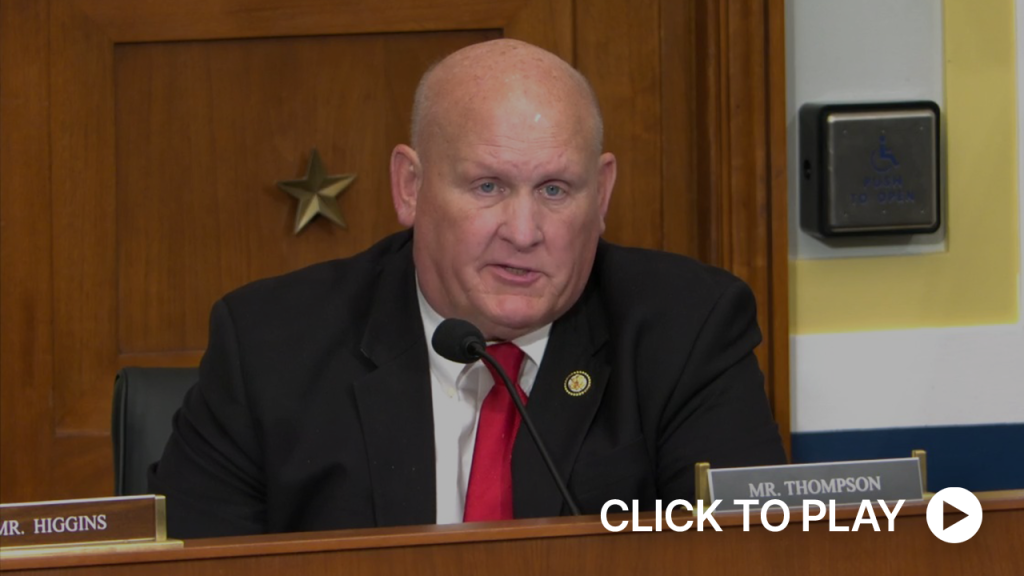
Rep. Thompson: “How can we in Congress, be better allies, not only to individual states, but also to producers across the country?”
Mr. Jackley: “Thank you, Mr. Chairman. I think by having hearings like this to begin the conversation about what is happening and looking at what can happen better. I mean, I look at the Maude situation and why I mentioned, and it wasn’t just Senator Rounds, it was Congressman Dusty Johnson. They got involved and I think that was a major turning point for the Maudes in agriculture. I think what Congress can do is emphasize whether it be through the Farm Bill or other things, the importance of agriculture, the recognition that I think many farmers and ranchers just want a fair playing field. They’re proud of their product, but there’s oftentimes government overreach, as you mentioned, making it more challenging to produce that product. Rules that perhaps don’t improve quality. they make things more unnecessarily challenging and expensive. And that’s not what government should do.”
…
Rep. Thompson: “How has the lack of clarity over the definition of waters in the U.S. impacted agriculture and over the years? How has litigation and constant rulemaking affected this issue?”
Attorney General Jackley: “The concern is by the federal government’s attempt to redefine water in such a way. It would include every, you know, pond potholes on the roads. It would have made it challenging for our farmers and to a degree, our ranchers to produce. And there was never in my mind any environmental justification. It was simply government overreach trying to take over waters, which as we all know, typically the states, are responsible for protecting the waters state laws…”
Rep. Thompson: “Any other witnesses have any thoughts on the Waters of the U.S.?”
Mr. Sullivan: “I come specifically from Crowley County, Colorado, where we were water rich, just 50 years ago. And the attack on, what I called the ‘attack on the charters of freedom,’ or the water and land and access to that, couldn’t be more exemplified than in Crowley County, Colorado, where in the ‘70s, ‘80s and ‘90s, the city of Denver came looking for more water and our farmers sold their water. And what was left was a mere form of a very—we went from prosperity to desolation overnight. So in this ‘war on beef’ that I talk about, it’s important to understand that these natural resources taken out of the hands of the private citizen results in the depletion of your local community prosperity. And that is exactly what they were trying to do though [Waters of the United States].”
Ms. Byfield: “Mr. Chairman, I think what I would just add to that is control of water is control of the land. So whoever controls the water is going to control that land. So it’s been a very strategic device in order to get to actually get to the end game, which is ultimate ownership of the property. And that certainly was what happened in our case. And I think when you look at WOTUS that’s the same game, that’s the same play. Whoever can control that water—and you have to understand property is not title and it’s not who pays the taxes, that’s not who owns the property. Who owns the property is whoever controls the property. And so devices like WOTUS, if they ultimately are controlling the property through its use because they can regulate it, then functionally, the federal government owns that property.”
Rep. Gary Palmer (R-Ala.) asked about the impact of lawfare, especially consent decrees, on affordability.
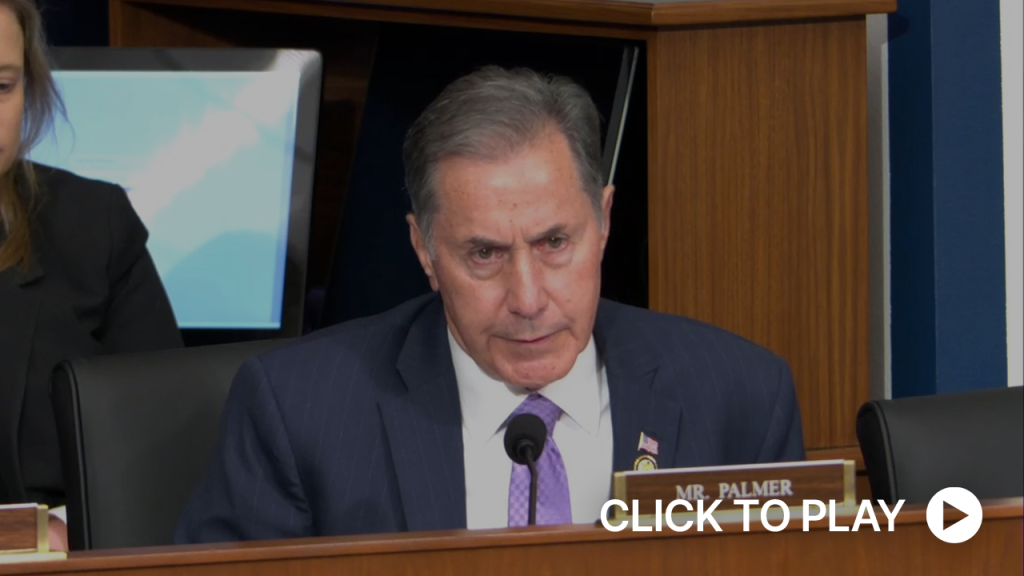
Rep. Palmer: “Mr. Sullivan, Miss Byfield, General Jackley, I’ve been very involved. I ran a think tank in Alabama. We did a little paper on how states could protect themselves from ‘sue and settle,’ or institutional reform litigation, as some people call it through consent decrees, which I think are really bad arrangements…I’d like all of your responses. We’ve got an affordability issue in the country right now. How is this impacting affordability for farming and ranching?”
Attorney General Jackley: “It’s significantly impacting it. Oftentimes when you increase government regulation, you have overreach, you increase costs. We’re seeing that everywhere in agriculture, and it has a significant impact in it, whether it’s glyphosate issues and other things. I mean, it affects the cost. We attorney generals fight back on many of these consent decrees and the sue and settle concept, but it definitely adversely impacts affordability.”
Mr. Sullivan: “Yeah, it is a great question. And I’d like to just point out that all of this is contention from the march to globalism. Agriculture producers are already strapped just because of overhead, but when you have to start fighting for the very land or listed property rights doesn’t have to be the land. It can be anything that helps you make a living and put food on the table. And when you have to fight for that all the time and not only takes a financial toll, but it takes an emotional toll, a family toll, and the worry never ends. And so with the with the march to globalism and the attack on farmers and ranchers, or what I call the ‘war on beef,’ it just continues to get worse and worse and worse, and I fear that we have gone down a road that maybe we have gone over the cliff. I do view [the Trump administration] as our last chance to save liberty and freedom through property rights and our ability to produce food, not only for our communities, but for this nation and the rest of the world.”
Ms. Byfield: “I think I’m going to address this in just a little bit of a different perspective. Congress has passed so many environmental laws that landowners have to comply with. We all know the permitting [National Environmental Policy Act] statute. The Endangered Species Act is another huge statute that impacts landowners and that basically is the blackmail. That is what puts the regulation on the landowners and puts them in a position so that it’s hard for them to produce food, hard for them to hold on to their property. That also sets up a scenario where now you need a savior to come in to bail out the landowners so we can keep feeding the American people.”
Rep. Eli Crane (R-Ariz.) inquired about how the Equal Access to Justice Act has emboldened environmental groups to promote lawfare against farmers.
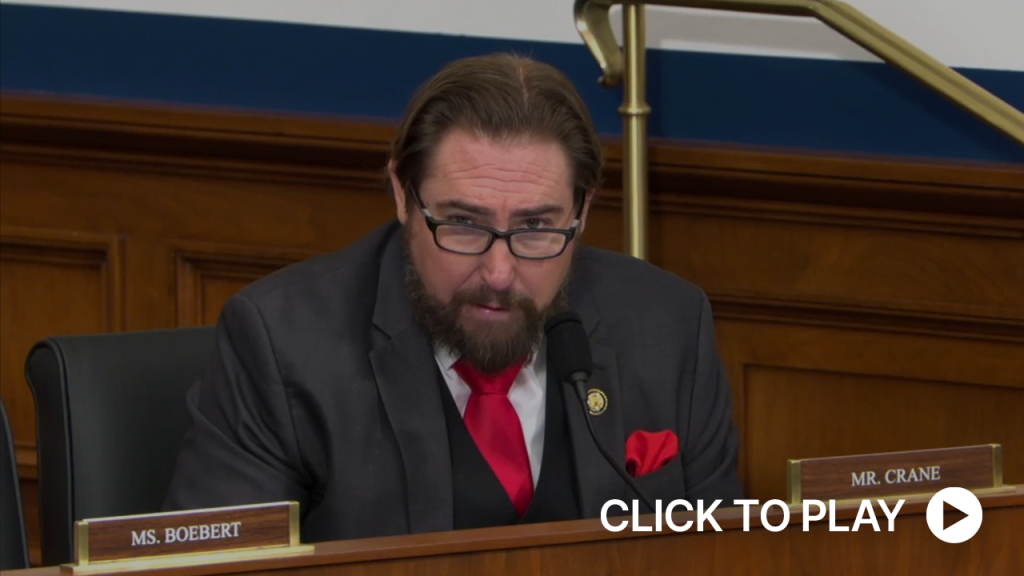
Rep. Crane: “The Equal Access to Justice Act, passed in 1980, expanded the federal government’s liability to pay attorney’s fees for those who prevail against it. But unlike individuals and small businesses, nonprofit organizations face no financial eligibility limits. This creates a system where well-funded environmental groups can repeatedly sue federal agencies and have their legal fees reimbursed by taxpayers. In Fiscal Year 24, the Equal Access to Justice Act spent approximately $120 million in legal reimbursements in places like Tonto National Forest. Groups such as the Center for Biological Diversity have filed lawsuits targeting grazing and land management, delaying projects and increasing costs when taxpayer dollars are funding both the lawsuits and the defense. While forest management is stalled and rural livelihoods are impacted, it is clear the system is not working as intended. And I was looking at the Equal Access to Justice Act, if I’m not mistaken, it applies to an individual with a net worth of $2 million or less, or the owner of a business or other organization worth $7 million or less. And with no more than 500 employees, whereas you have nonprofits like the Center for Biological Diversity, and as of 2024, its total assets were almost $60 million, annual revenue of $45.7 million, and has anywhere between 201 and 500 employees. Do you guys see this as a massive problem? Because I hear from ranchers in my district all the time that they constantly live under lawfare.”
Ms. Byfield: “Yeah, absolutely. That Equal Access to Justice Act is how they pay their bills. So they sue when they get a favorable administration. They settle, they get their attorneys’ fees paid for, and then that gives them the money to come out and do it again. So, the Center for Biological Diversity, in particular, I mean, a lot of what they do is they sue for protection of endangered species. And one of the things that I mentioned earlier is that they, they get the money two ways, through the sue and settle, [and Equal Access to Justice Act]. They get funded that way, but then they get funded on the back end too, because through the litigation process, which is necessary to protect the species and restrict the land, they also get paid through that, through the conservation easements where corporations have to pay that, that land trust for the management operation fees that it will incur to manage that through the life of the protection of that species or in perpetuity. So if they can get the species listed, they get many through sue and settle, and then if they can keep it on the list and ensure it’s never recovered, they get paid to infinity. And all of that is baked in through the federal laws. The federal laws are the start of all of that. And so that’s where, you know, if we can start figuring out some ways to cut off that money, that would be very helpful.”
Click here to watch the roundtable.